This past month, I've been doing a series, What I've Learned about Writing Through Movies. In each post, I feature a different movie, discussing the effectiveness of its story elements as
well as what can be learned from the film as a whole. Previous movies include The Matrix and The Princess Bride.
The final week's feature is The Shawshank Redemption. It's a fantastic movie, and I learn something new every time I watch it. I also alluded to it in this previous post.
The movie itself has an interesting history. No one could pronounce the title, and it was relatively little known in theaters. It wasn't until people caught the movie on video and DVD that it turned into a cult hit. And I believe it did so because of it's excellent storyline (based off a short story penned by Stephen King).
Why The Shawshank Redemption works as a story:
For mystery writers (or any writers) wanting to perfect their slight of hand, who want to produce effective, believable red herrings, this movie is definitely one to watch. The Shawshank Redemption does a brilliant job of introducing objects and elements that aren't fully explained until the very end, thus reshaping the viewer's perception of what they thought took place. Examples include a movie poster, a rock hammer, a false identity, and a six-foot section of rope.
So, if you introduce an idea, it better mean something. And if it has a higher purpose that cannot be deciphered until the story fully unfolds, that's even better.
What writers can learn from The Shawshank Redemption:
1.There are places in the world that aren't made of stone.
This is for the day-job workers out there, eking a writing life outside their main source of income. Sometimes it seems there's nothing outside the dead-end of the the day-in, day-out workplace.
But I've found my writing is the catalyst that keeps me going. It leads me to opportunities that keep me learning and growing, even if some of the other elements in my life seem stagnant.
This is also important to remember when rejections come your way. Just because one editor or agent rejected your material doesn't mean everyone will.
Similarly, if you aren't accepted into that MFA program of your dreams, keep putting yourself out there anyway. You'll inevitably improve.
2. Some birds aren't meant to be caged.
For many years, I limited myself to what other people thought I was capable of. I am trying to undo this now, by letting my inner colors shine freely, by living my life on my terms. Because if you aren't free in your own life, then what do you have?
So let yourself go. Give yourself a break. Drop those invisible chains, and stop standing in your own way.
3. Salvation lies within.
But it has to come from within. You can't rely on what other people say about you or your writing. Critiques are helpful, but ultimately it's you, your life, your story, your writing. Find the inner fire that drives you amid all the pitfalls that are thrown your way.
4. No good hope ever dies.
One of the best defenses a writer has is hope. Without it, any external barriers will knock you flat. They'll make you give in, make you settle for what you don't deserve. I've experienced this cyclically--I'll go into a project with all the optimism in the world...and gradually, painfully, I'm beaten to a pulp.
But, even then, I make myself get up. To keep standing, even when all I feel like doing is lying down. Hope is what makes this possible.
So keep on, and always, always--keep hoping.
Your turn: What has The Shawshank Redemption taught you?

Monday, February 25, 2013

Tuesday, February 19, 2013
Why "The Matrix" Has You
To liven things up in February, I've decided to do a series: What I've
Learned about Writing Through Movies. In each post, I'll feature a different
movie and discuss the effectiveness of its story elements as well as what can be
learned from the film as a whole. This week, I decided to focus on the The Matrix, since I watched it recently with new eyes, dissecting how different story aspects were introduced. Coupled with some recent feedback from a critique partner, it did wonders for my revisions.
Why The Matrix works as a story:
World-building elements are explained gradually and succinctly (fantasy and sci-fi writers, take note).
Instead of hitting the viewer over the head with every single aspect of the post-apocalyptic "desert of the real", story elements are introduced bit by bit. Not only does this avoid the over-explaining that sometimes occurs with sci-fi, but it also mutes the story's sci-fi tropes, therefore highlighting the unique elements of the world and making them more clearly visible.
Some examples, through dialogue:
"The answers are coming, Neo."
"Throughout human history, we have been dependent on machines to survive. Fate, it seems, is not without a sense of irony."
"The body cannot live without the mind."
What The Matrix teaches writers:
1. Follow the white rabbit.
A writer's path can often take unexpected twists and turns. The book you were hoping to publish doesn't, but the second one you wrote does. Or, that screenplay you wrote fizzled, but that novel you had in waiting just found the right agent. The journey isn't without pitfalls, and often, things don't turn out as planned. But the journey is still necessary, and important--especially when it takes you to unexpected places.
2. I've shown you the door, but only you can walk through it.
I used to think that a career in writing was dependent on getting to know mentors, authors, and agents so that they could help us newbies avoid pitfalls along the path. But I've since realized I have to blaze my own trail, and that no one else will pull me along to where I need to go. I have my own two feet, and I need to trust them. Everyone's journey is different--yours is unique, and you need to make it your own.
3. There is no spoon.
The page is where you get to say what you want. Stop writing to appeal to others--your friends, a publisher, even an agent. Stop restricting yourself.
Because that's when the magic happens. When I've let go of my own constraints (and believe me, there are many), that's when the writing pops off the page. That's when I final in contests. That's when I get partial requests.
4. Don't worry about the vase.
One thing I've learned is that if I over-worry about one thing, a much bigger problem falls by the wayside. When I first started as a writer, I was very concerned about line-edits--if the words fit together on the page or not. I later realized, with a lot more writing and reading, that concentrating on the words made me neglect more key, important, big-picture things. Character development. Plot. Theme. Believability. Don't hyper-focus on just one thing--make sure you are aware of a novel's bigger picture flaws too--because ultimately, those will have to be fixed before any line-edits can be touched.
5. Knowing the path is different than walking the path.
Similar to #2. (Addendum: Also applies to knowing that you need an effective inciting event, good character development, and an intriguing plot. But actually exceuting these things can be a lot harder than it seems.) I know my goals as a writer. But obtaining them will not be as simple as mapping them out in my brain. I will plan as much as I can, but ultimately, things will turn out the way they're meant to. And that may mean having to readjust my original expectations. Not to sacrifice my dreams--but to ensure I make the most of my potential.
I now pass along the proffered red pill--what has The Matrix taught you?
Why The Matrix works as a story:
World-building elements are explained gradually and succinctly (fantasy and sci-fi writers, take note).
Instead of hitting the viewer over the head with every single aspect of the post-apocalyptic "desert of the real", story elements are introduced bit by bit. Not only does this avoid the over-explaining that sometimes occurs with sci-fi, but it also mutes the story's sci-fi tropes, therefore highlighting the unique elements of the world and making them more clearly visible.
Some examples, through dialogue:
"The answers are coming, Neo."
"Throughout human history, we have been dependent on machines to survive. Fate, it seems, is not without a sense of irony."
"The body cannot live without the mind."
What The Matrix teaches writers:
1. Follow the white rabbit.
A writer's path can often take unexpected twists and turns. The book you were hoping to publish doesn't, but the second one you wrote does. Or, that screenplay you wrote fizzled, but that novel you had in waiting just found the right agent. The journey isn't without pitfalls, and often, things don't turn out as planned. But the journey is still necessary, and important--especially when it takes you to unexpected places.
2. I've shown you the door, but only you can walk through it.
I used to think that a career in writing was dependent on getting to know mentors, authors, and agents so that they could help us newbies avoid pitfalls along the path. But I've since realized I have to blaze my own trail, and that no one else will pull me along to where I need to go. I have my own two feet, and I need to trust them. Everyone's journey is different--yours is unique, and you need to make it your own.
3. There is no spoon.
The page is where you get to say what you want. Stop writing to appeal to others--your friends, a publisher, even an agent. Stop restricting yourself.
Because that's when the magic happens. When I've let go of my own constraints (and believe me, there are many), that's when the writing pops off the page. That's when I final in contests. That's when I get partial requests.
4. Don't worry about the vase.
One thing I've learned is that if I over-worry about one thing, a much bigger problem falls by the wayside. When I first started as a writer, I was very concerned about line-edits--if the words fit together on the page or not. I later realized, with a lot more writing and reading, that concentrating on the words made me neglect more key, important, big-picture things. Character development. Plot. Theme. Believability. Don't hyper-focus on just one thing--make sure you are aware of a novel's bigger picture flaws too--because ultimately, those will have to be fixed before any line-edits can be touched.
5. Knowing the path is different than walking the path.
Similar to #2. (Addendum: Also applies to knowing that you need an effective inciting event, good character development, and an intriguing plot. But actually exceuting these things can be a lot harder than it seems.) I know my goals as a writer. But obtaining them will not be as simple as mapping them out in my brain. I will plan as much as I can, but ultimately, things will turn out the way they're meant to. And that may mean having to readjust my original expectations. Not to sacrifice my dreams--but to ensure I make the most of my potential.
I now pass along the proffered red pill--what has The Matrix taught you?
Sunday, February 10, 2013
MY EPIC FAIRY TALE FAIL by Anna Staniszewski
I'm really excited to feature Anna Staniszewski, who I've followed ever since her novel MY VERY UNFAIRY TALE LIFE debuted in 2011. I even posted about it, and it was one of the favorite books I read last year.
And now (drumroll), the sequel, MY EPIC FAIRY TALE FAIL just released!
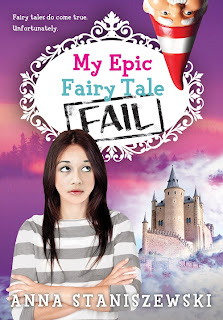 Fairy tales do come true. Unfortunately.
Jenny the Adventurer is back, and this time she's off to the Land of Tales: the crazy place that all fairy tales come from. If she can defeat an evil witch and complete three impossible tasks--all without getting eaten by blood-thirsty monsters--Jenny might finally get some answers about what happened to her parents.
This is one adventure Jenny can't afford to fail.
Here are Anna's answers to my questions:
Your website bio states that you have an MFA in Writing for Children. Has this impacted your writing career in any way, and can you tell us more about your journey toward becoming a writer?
I got my MFA from Simmons College back in 2005, and it's definitely impacted my career. Not only did the program connect me with other people in the field, but it also made me determined to get published. I won't lie; it was a looong journey. I wrote, got rejected, wrote some more. Finally, after a lot of ups and downs, I found my awesome agent. Then it took us a year to sell my first book. It was a stressful journey, but it taught me a lot about myself and about my writing. Now, I'm lucky enough to be teaching in the MFA program at Simmons (they can't get rid of me!) and I love getting to see other budding authors working on their craft.
I've heard Simmons is a great program--and your experience definitely demonstrates that perseverance is key! MY EPIC FAIRY TALE FAIL is the second in the series that started with MY VERY UNFAIRY TALE LIFE. What inspired the original idea, and what do you want readers to take away from both books?
About five years ago, I was working on a dark YA project that was really bringing me down. I needed something fun to work on, so I sat down and wrote a pretty bizarre scene about a girl and a talking frog. I loved the girl's personality, and I wanted to find out more about her. I kept coming back to the project when I was stuck on other things, and I think it helped to keep me sane.
Working on the series has really brought me back to fairy tales, which I've loved since I was very young, but it's also been fascinating to see Jenny's character grow and change. Ultimately, her story is about identity and family--and about wacky adventures--which is what I hope readers take away from it.
Jenny does have a great personality--and she's definitely fun to read. On your website, readers have the option to sign up for your newsletter. How does the newsletter benefit you and your readers, and do you recommend newsletter writing to other authors?
The newsletter is a new feature--I actually just sent out my first one yesterday. I wanted to try it out because I love getting newsletters from other authors so that I know what they're up to and what's new with them. And if they can include fun extras, that's always nice too. I have a feeling my dog, Emma, is going to be a recurring figure in my newsletter.
It will be exciting to see what develops! I love the design of your website and blog. Do you have any advice for other writers wanting to develop an online presence?
Thank you! My husband is a techie, so I had him help me set it up. But I really wanted something that I'd have an easy time maintaining, which is why I went with a Wordpress site. My advice is to keep your website current--if you don't blog, have some type of changing content that will keep your site kicking. But most importantly, have fun with it. Don't do anything that feels like a chore.
Excellent advice! It's so important to have fun, and it's something I forget too often. What are some of your current and future projects?
Right now, I'm working on the third book in the UnFairy Tale series (which will be coming out in November 2013). After that, I'll be digging into my next series with Sourcebooks, The Dirt Diary, which will be released next year. I also love picture books, so I try to sneak in working on one here and there in between deadlines.
Thank you, Anna!
Anna's Bio:
Born in Poland and raised in the United States, Anna Staniszewski grew up loving stories in both Polish and English. She was named the 2006-2007 Writer-in-Residence at the Boston Public Library and a winner of the 2009 PEN New England Susan P. Bloom Discovery Award. Currently, Anna lives outside of Boston, Mass. with her husband and their adopted black Labrador, Emma. When she's not writing, Anna spends her time teaching, reading, and challenging unicorns to games of hopscotch. You can visit her at www.annastan.com.
For those looking to purchase MY VERY UNFAIRY TALE LIFE or MY EPIC FAIRY TALE FAIL, feel free to click on the links below:
And now (drumroll), the sequel, MY EPIC FAIRY TALE FAIL just released!

Jenny the Adventurer is back, and this time she's off to the Land of Tales: the crazy place that all fairy tales come from. If she can defeat an evil witch and complete three impossible tasks--all without getting eaten by blood-thirsty monsters--Jenny might finally get some answers about what happened to her parents.
This is one adventure Jenny can't afford to fail.
Here are Anna's answers to my questions:
Your website bio states that you have an MFA in Writing for Children. Has this impacted your writing career in any way, and can you tell us more about your journey toward becoming a writer?
I got my MFA from Simmons College back in 2005, and it's definitely impacted my career. Not only did the program connect me with other people in the field, but it also made me determined to get published. I won't lie; it was a looong journey. I wrote, got rejected, wrote some more. Finally, after a lot of ups and downs, I found my awesome agent. Then it took us a year to sell my first book. It was a stressful journey, but it taught me a lot about myself and about my writing. Now, I'm lucky enough to be teaching in the MFA program at Simmons (they can't get rid of me!) and I love getting to see other budding authors working on their craft.
I've heard Simmons is a great program--and your experience definitely demonstrates that perseverance is key! MY EPIC FAIRY TALE FAIL is the second in the series that started with MY VERY UNFAIRY TALE LIFE. What inspired the original idea, and what do you want readers to take away from both books?
About five years ago, I was working on a dark YA project that was really bringing me down. I needed something fun to work on, so I sat down and wrote a pretty bizarre scene about a girl and a talking frog. I loved the girl's personality, and I wanted to find out more about her. I kept coming back to the project when I was stuck on other things, and I think it helped to keep me sane.
Working on the series has really brought me back to fairy tales, which I've loved since I was very young, but it's also been fascinating to see Jenny's character grow and change. Ultimately, her story is about identity and family--and about wacky adventures--which is what I hope readers take away from it.
Jenny does have a great personality--and she's definitely fun to read. On your website, readers have the option to sign up for your newsletter. How does the newsletter benefit you and your readers, and do you recommend newsletter writing to other authors?
The newsletter is a new feature--I actually just sent out my first one yesterday. I wanted to try it out because I love getting newsletters from other authors so that I know what they're up to and what's new with them. And if they can include fun extras, that's always nice too. I have a feeling my dog, Emma, is going to be a recurring figure in my newsletter.
It will be exciting to see what develops! I love the design of your website and blog. Do you have any advice for other writers wanting to develop an online presence?
Thank you! My husband is a techie, so I had him help me set it up. But I really wanted something that I'd have an easy time maintaining, which is why I went with a Wordpress site. My advice is to keep your website current--if you don't blog, have some type of changing content that will keep your site kicking. But most importantly, have fun with it. Don't do anything that feels like a chore.
Excellent advice! It's so important to have fun, and it's something I forget too often. What are some of your current and future projects?
Right now, I'm working on the third book in the UnFairy Tale series (which will be coming out in November 2013). After that, I'll be digging into my next series with Sourcebooks, The Dirt Diary, which will be released next year. I also love picture books, so I try to sneak in working on one here and there in between deadlines.
Thank you, Anna!
Anna's Bio:
Born in Poland and raised in the United States, Anna Staniszewski grew up loving stories in both Polish and English. She was named the 2006-2007 Writer-in-Residence at the Boston Public Library and a winner of the 2009 PEN New England Susan P. Bloom Discovery Award. Currently, Anna lives outside of Boston, Mass. with her husband and their adopted black Labrador, Emma. When she's not writing, Anna spends her time teaching, reading, and challenging unicorns to games of hopscotch. You can visit her at www.annastan.com.
For those looking to purchase MY VERY UNFAIRY TALE LIFE or MY EPIC FAIRY TALE FAIL, feel free to click on the links below:
Wednesday, February 6, 2013
What "The Princess Bride" Can Teach Writers
To liven things up in February, I've decided to do a series: What I've Learned about Writing Through Movies. Each week, I'll feature a different movie and discuss the effectiveness of its story elements as well as what can be learned from the film as a whole.
I chose The Princess Bride first because I came across an awesome post from Snagglebox, a website for parents with autistic children. 17 Things The Princess Bride Taught Me About Autism Parenting offers a ton of great advice, both for writers, and anyone else looking for inspiration when life gets tough. So, without further ado:
Why The Princess Bride works as a story (it was also a novel first, which always helps):
Effective inciting event: Inciting events must a) occur in order for the rest of story to happen and b) spur growth in the characters.
When Westley is presumed dead, Buttercup agrees to marry Prince Humperdink. a) Without Westley's presumed death, Buttercup would have no reason to marry Humperdink. b) Buttercup is now forced to make a choice.
Clear and believable motivations: "Hello. My name is Inigo Montoya. You killed my father. Prepare to die." Inigo's main motivation is to avenge his father--and he never deters, even at the very end, when the killer, fatally wounded, offers him power and riches. Inigo's response? "I want my father back, you son-of-a-bitch." A clear and believable motivation not only makes a character relatable, but also endearing. Even if he's a murderer.
What writers can learn from The Princess Bride (adapted from the Snagglebox post):
1. Optimism can get you through the fire swamp
It's important to take a step back and assess a seemingly overwhelming problem (or a ROUS--Rat of Unusual Size). On a listserv I administer, someone was masking advertisements for their company in their posts. The question then became--to ban them, or not? It became quite the touchy subject on the listserv, and quite a bit of vitriol emoted from the online masses. After taking a day or so to deliberate, I decided to keep this person, with the stipulation they'd be banned if the behavior was repeated. It was a problem I hadn't encountered, but that didn't make it unsolvable. Which brings us to...
2. You rush a miracle man, you get rotten miracles
Honing a skill, especially writing, requires patience and time. Allow yourself room to grow, and don't rush into anything. I used to think, "If I can just get a publishing deal quicker..." But now, it's more along the lines of, "I want to make sure I'm the best writer possible when that happens." Which means it's easy to forget that...
3. You may already have a wheelbarrow
In my strives to improve, I sometimes forget about my assets. Yeah, I need to improve my plot and structure...but I've also been told I write good action scenes. Some of my secondary characters aren't as 3-D as they could be...but I'm already taking strides to connect them to the main conflict. For every improvement needed, there is usually a hurdle already jumped over. And speaking of hurdles...
4. Success means using the right moves for the terrain
I've said this before in other posts--just because a strategy works for one writer doesn't mean it will work for you. This is especially true regarding revision. Some writers embrace the "crappy first draft," where you just get the words out and worry about how they'll play out in revisions. However, while I'm drafting, I try to find big-picture problems and fix them, even before the first draft is done. Then, I'll at least know that the bones of the story are more likely to fit together when I start to revise. Just find your own process and stick to it.
5. Wiggling a finger is worth celebrating
Small victories mean progress. Last year, I published a non-fiction article about YA books in libraries, and recently, a book chapter from one of my novels was accepted at a conference. Be sure to list your own accomplishments often, especially when you feel discouraged--they are good indicators of your inevitable potential.
Your turn: What did you learn from The Princess Bride?
I chose The Princess Bride first because I came across an awesome post from Snagglebox, a website for parents with autistic children. 17 Things The Princess Bride Taught Me About Autism Parenting offers a ton of great advice, both for writers, and anyone else looking for inspiration when life gets tough. So, without further ado:
Why The Princess Bride works as a story (it was also a novel first, which always helps):
Effective inciting event: Inciting events must a) occur in order for the rest of story to happen and b) spur growth in the characters.
When Westley is presumed dead, Buttercup agrees to marry Prince Humperdink. a) Without Westley's presumed death, Buttercup would have no reason to marry Humperdink. b) Buttercup is now forced to make a choice.
Clear and believable motivations: "Hello. My name is Inigo Montoya. You killed my father. Prepare to die." Inigo's main motivation is to avenge his father--and he never deters, even at the very end, when the killer, fatally wounded, offers him power and riches. Inigo's response? "I want my father back, you son-of-a-bitch." A clear and believable motivation not only makes a character relatable, but also endearing. Even if he's a murderer.
What writers can learn from The Princess Bride (adapted from the Snagglebox post):
1. Optimism can get you through the fire swamp
It's important to take a step back and assess a seemingly overwhelming problem (or a ROUS--Rat of Unusual Size). On a listserv I administer, someone was masking advertisements for their company in their posts. The question then became--to ban them, or not? It became quite the touchy subject on the listserv, and quite a bit of vitriol emoted from the online masses. After taking a day or so to deliberate, I decided to keep this person, with the stipulation they'd be banned if the behavior was repeated. It was a problem I hadn't encountered, but that didn't make it unsolvable. Which brings us to...
2. You rush a miracle man, you get rotten miracles
Honing a skill, especially writing, requires patience and time. Allow yourself room to grow, and don't rush into anything. I used to think, "If I can just get a publishing deal quicker..." But now, it's more along the lines of, "I want to make sure I'm the best writer possible when that happens." Which means it's easy to forget that...
3. You may already have a wheelbarrow
In my strives to improve, I sometimes forget about my assets. Yeah, I need to improve my plot and structure...but I've also been told I write good action scenes. Some of my secondary characters aren't as 3-D as they could be...but I'm already taking strides to connect them to the main conflict. For every improvement needed, there is usually a hurdle already jumped over. And speaking of hurdles...
4. Success means using the right moves for the terrain
I've said this before in other posts--just because a strategy works for one writer doesn't mean it will work for you. This is especially true regarding revision. Some writers embrace the "crappy first draft," where you just get the words out and worry about how they'll play out in revisions. However, while I'm drafting, I try to find big-picture problems and fix them, even before the first draft is done. Then, I'll at least know that the bones of the story are more likely to fit together when I start to revise. Just find your own process and stick to it.
5. Wiggling a finger is worth celebrating
Small victories mean progress. Last year, I published a non-fiction article about YA books in libraries, and recently, a book chapter from one of my novels was accepted at a conference. Be sure to list your own accomplishments often, especially when you feel discouraged--they are good indicators of your inevitable potential.
Your turn: What did you learn from The Princess Bride?
Monday, February 4, 2013
Tuesday, January 29, 2013
BECOMING HUMAN, by Eliza Green
I met this author via Twitter--she writes a great blog, Eliza Loves Sci Fi, and it covers everything from writing tips to science, science fiction, movie trivia and other things. Her first book, BECOMING HUMAN is a great science fiction novel that just debuted on Amazon.
For a chance to win your own copy, write the name of your favorite alien (made up ones are fine too) in the comments section!
Contest is now complete!
Eliza's Bio:
Eliza Green writes down-to-earth science fiction that has stemmed from her lifelong obsession with science fiction stories.

Your website bio states that you have "a healthy (although not obsessive) love of technology and sciency stuff." How do these interests influence your writing, and can you tell us more about your journey toward becoming a writer?
Well, I say I have a non-obsessive interest because I don’t want people to think I’m an expert or anything! I can’t fix computers and I don’t read New Scientist religiously. But I love technology (I’m pretty good on a computer I’ll have you know!) and I’m fascinated by how things work, like how the human body sometimes cures itself of cancer or how we might be able to combat ageing in the future.
My own journey began four years ago when I hit a difficult patch in my day job. I was seriously considering quitting, but I told myself to think about it rationally. It was a knee jerk reaction, something else was happening in the organisation that had nothing to do with me. During that time, I started to think about other things and I suddenly wanted to do something I enjoyed. I’ve always been creative. I can sing (in private!) and I have an eye for colour. But you can’t really make a career out of that unless you study for years. I’d already tried my hand at interior decorating years before, but I didn’t stick with it. I was never good at the drawing or rendering element of it, which you had to do by hand as part of the course. I stumbled upon the Stephenie Meyer Twilight Trilogy having seen the first film and I devoured the books. While I was impressed with her story telling ability, I was equally frustrated with how she wrote some of the scenes. I began to ask myself ‘How would I write this?’ That was it. That was the beginning. A week or so later, I took out my laptop and wrote 3k words on the first thing that came into my head. It was the start of another project I’m working on. I felt giddy, knowing that I had complete control over how the story began and ended.
We've had similar experiences! A difficult time in my day-job motivated me to finally write my novel. Sometimes the best things come out of bad circumstances. You say that BECOMING HUMAN was an idea that "just had to come out." Where did the idea come from, and what do you want readers to take away when they're finished reading it?
At same time I wrote the 3k words for my other project, the idea for BECOMING HUMAN came to me. I am a huge (!) fan of science fiction, but I prefer to devour TV shows and movies over books. I don’t know why. I’m not against reading the books and I’ve enjoyed a few (Orson Scott Card’s ‘Ender’s Shadow’ comes to mind), but the movies and TV shows are faster paced and I find I can sit there and think of a whole string of ‘what if’ ideas as I watch them. Even though I had decided to start with the other project first (women’s fiction), I was itching to pitch the idea of the science fiction book to my partner who is a ‘hard core’ fan of the genre. I wrote a short story, about 10k, and showed it to him. The short story centred on the chapter in the book where the Indigene, Stephen talks to the young boy for the first time. There are so many alien movies where the alien is always trying to kill everyone. I’m bored with those. I wanted to do something different. I wondered what an alien might actually say to a human if circumstances suddenly brought them together. My partner was intrigued when he read it and told me to keep going.
First and foremost I would like readers to enjoy it, but there is an underlying message: We are complex creatures and we make mistakes but do we have the capacity to learn from them?
I feel the exact same way--I write lower fantasy, and can barely stand to read some of the high fantasy available on the market. I'd much rather watch--and like you, dream up scenarios! You write a blog on your website: Eliza Loves Sci Fi. Is it difficult to balance the blog with other writerly tasks? Do you have any advice for aspiring writers wanting to start a blog?
Yes it is difficult and I have to be practical. With a full time job I can’t post every day, and I don’t want to. The blog is fun and a great way of getting to know your potential readers and it also breaks down barriers. Many writers follow me because I blog about my experiences as a writer. I think it’s quite therapeutic to talk about the problems you’ve been experiencing and to get advice or feedback from others. I don’t believe in being precious or secretive about how I edit, format or market my work. I’m only competing with myself and I know that writers will use the advice how they see fit. If it helps, then great. I also seek advice in some of my posts and I find other sites really useful for tips.
Bottom line is I need to write books. That’s what I want to do as a full time job. If I have to excuse myself from my blog every now and again, I will.
Aspiring writers wishing to start a blog: try to decide what you want to write about. I’ve seen some writer blogs that talk about everything, but there’s no focus on what the blog is about. It’s not clear if they’re writers because they don’t discuss their writing work. I’ve seen other blogs that only promote their work, and I find that a little annoying to be honest. I can think of one (nameless) author, who posted once a month and only about his upcoming books. I thought to myself, why do I want to follow this guy? Maybe he was doing really well with sales but I didn’t care. I wanted to know how he became a traditionally published author. Then there are the blogs you follow because you like the fun posts, or you’re a writer and the blogger is sharing good information. I follow those sites on Google Reader and I share it with my Twitter followers.
I agree--with a blog, focus and direction are especially essential. BECOMING HUMAN is your first self-published novel. What advice do you have for writers interested in self-publishing? Is there anything you wish you'd known sooner?
Advice first. Go into self publishing with your eyes wide open. Prepare for a ton of work. Do not say, ‘I’m only doing this because traditional publishing didn’t work out for me.’ Do say,’ I’m as good as any traditionally published author and I’m going to prove it by producing a quality product.’ Readers can smell desperation a mile away so always be professional in everything you do, as if you had a publishing house and agent behind you.
I would like to have known a few things sooner, like deadlines for book covers don’t mean much if you still have to finish a final round of editing so you can give them your page count. Just when you think you’ve formatted your ebook correctly, Kindle Fire comes along and screws it up. These are minor issues and you will pick up many things as you go along. Don’t be too hard on yourself but be realistic about deadlines.
Excellent advice! If you were stuck on a desert island and had a choice of two movies and two books to take, which would you choose?
Ooh, good question!
Movie 1: I would take Willy Wonka and The Chocolate Factory. To this day, I still get a laugh out of Verruka and her “I want a golden egg.” song.
Movie 2: Weird Science. I loved it when it came out first and it features a very young Robert Downey Junior. I grew up with John Hughes movies (Pretty in Pink, The Breakfast Club) and this one is very funny. Then there were those important lessons you had to learn in all of Hughes’s movies.
Book 1: Mockingjay (Book 3 in the Hunger Games Trilogy). I haven’t read it yet and I want to see how it all ends.
Book 2: I’m not going to say BECOMING HUMAN, because I would only discover some annoying error in the book and without a laptop or internet connection, I would have no way to fix it. Grr. So, I’ll say anything by Michael Connolly and the Hieronymus Bosch series.
Contest is now complete!
Eliza's Bio:
Eliza Green writes down-to-earth science fiction that has stemmed from her lifelong obsession with science fiction stories.
She has worked in many industries from fashion to sport to
finance, but caught the writing bug several years ago and has now released her
first novel, BECOMING HUMAN, part one of the Exilon 5 trilogy.
Since Eliza was young, she has always been a fan of science fiction television shows and films and is bringing that love to her new trilogy. She hopes to capture the imagination of readers who shy away from the genre with her new novel, set on Earth and Exilon 5.
She is currently working on ALTERED REALITY, book 2 in the Exilon 5 trilogy.
Since Eliza was young, she has always been a fan of science fiction television shows and films and is bringing that love to her new trilogy. She hopes to capture the imagination of readers who shy away from the genre with her new novel, set on Earth and Exilon 5.
She is currently working on ALTERED REALITY, book 2 in the Exilon 5 trilogy.
BECOMING HUMAN is available in print and Kindle ebook format
(exclusively until mid March). Afterwards, it will be available in several other
formats through Smashwords.

Two worlds. Two species. One terrifying secret. In 2163, a polluted and
overcrowded Earth forces humans to search for a new home. But the
exoplanet they target, Exilon 5, is occupied. Having already begun a
massive relocation programme, Bill Taggart is sent to monitor the
Indigenes, the race that lives there. He is a man on the edge. He
believes the Indigenes killed his wife, but he doesn’t know why. His
surveillance focuses on the Indigene Stephen, who has risked his life to
surface during the daytime. Stephen has every reason to despise the
humans and their attempts to colonise his planet. To protect his species
from further harm, he must go against his very nature and become human.
But one woman holds a secret that threatens Bill’s and Stephen’s plans,
an untruth that could rip apart the lives of those on both worlds.
BECOMING HUMAN, part one in the Exilon 5 trilogy, is a science-fiction
adventure that you won’t want to put down.
Here are Eliza's answers to some of my questions:
Well, I say I have a non-obsessive interest because I don’t want people to think I’m an expert or anything! I can’t fix computers and I don’t read New Scientist religiously. But I love technology (I’m pretty good on a computer I’ll have you know!) and I’m fascinated by how things work, like how the human body sometimes cures itself of cancer or how we might be able to combat ageing in the future.
My own journey began four years ago when I hit a difficult patch in my day job. I was seriously considering quitting, but I told myself to think about it rationally. It was a knee jerk reaction, something else was happening in the organisation that had nothing to do with me. During that time, I started to think about other things and I suddenly wanted to do something I enjoyed. I’ve always been creative. I can sing (in private!) and I have an eye for colour. But you can’t really make a career out of that unless you study for years. I’d already tried my hand at interior decorating years before, but I didn’t stick with it. I was never good at the drawing or rendering element of it, which you had to do by hand as part of the course. I stumbled upon the Stephenie Meyer Twilight Trilogy having seen the first film and I devoured the books. While I was impressed with her story telling ability, I was equally frustrated with how she wrote some of the scenes. I began to ask myself ‘How would I write this?’ That was it. That was the beginning. A week or so later, I took out my laptop and wrote 3k words on the first thing that came into my head. It was the start of another project I’m working on. I felt giddy, knowing that I had complete control over how the story began and ended.
We've had similar experiences! A difficult time in my day-job motivated me to finally write my novel. Sometimes the best things come out of bad circumstances. You say that BECOMING HUMAN was an idea that "just had to come out." Where did the idea come from, and what do you want readers to take away when they're finished reading it?
At same time I wrote the 3k words for my other project, the idea for BECOMING HUMAN came to me. I am a huge (!) fan of science fiction, but I prefer to devour TV shows and movies over books. I don’t know why. I’m not against reading the books and I’ve enjoyed a few (Orson Scott Card’s ‘Ender’s Shadow’ comes to mind), but the movies and TV shows are faster paced and I find I can sit there and think of a whole string of ‘what if’ ideas as I watch them. Even though I had decided to start with the other project first (women’s fiction), I was itching to pitch the idea of the science fiction book to my partner who is a ‘hard core’ fan of the genre. I wrote a short story, about 10k, and showed it to him. The short story centred on the chapter in the book where the Indigene, Stephen talks to the young boy for the first time. There are so many alien movies where the alien is always trying to kill everyone. I’m bored with those. I wanted to do something different. I wondered what an alien might actually say to a human if circumstances suddenly brought them together. My partner was intrigued when he read it and told me to keep going.
First and foremost I would like readers to enjoy it, but there is an underlying message: We are complex creatures and we make mistakes but do we have the capacity to learn from them?
I feel the exact same way--I write lower fantasy, and can barely stand to read some of the high fantasy available on the market. I'd much rather watch--and like you, dream up scenarios! You write a blog on your website: Eliza Loves Sci Fi. Is it difficult to balance the blog with other writerly tasks? Do you have any advice for aspiring writers wanting to start a blog?
Yes it is difficult and I have to be practical. With a full time job I can’t post every day, and I don’t want to. The blog is fun and a great way of getting to know your potential readers and it also breaks down barriers. Many writers follow me because I blog about my experiences as a writer. I think it’s quite therapeutic to talk about the problems you’ve been experiencing and to get advice or feedback from others. I don’t believe in being precious or secretive about how I edit, format or market my work. I’m only competing with myself and I know that writers will use the advice how they see fit. If it helps, then great. I also seek advice in some of my posts and I find other sites really useful for tips.
Bottom line is I need to write books. That’s what I want to do as a full time job. If I have to excuse myself from my blog every now and again, I will.
Aspiring writers wishing to start a blog: try to decide what you want to write about. I’ve seen some writer blogs that talk about everything, but there’s no focus on what the blog is about. It’s not clear if they’re writers because they don’t discuss their writing work. I’ve seen other blogs that only promote their work, and I find that a little annoying to be honest. I can think of one (nameless) author, who posted once a month and only about his upcoming books. I thought to myself, why do I want to follow this guy? Maybe he was doing really well with sales but I didn’t care. I wanted to know how he became a traditionally published author. Then there are the blogs you follow because you like the fun posts, or you’re a writer and the blogger is sharing good information. I follow those sites on Google Reader and I share it with my Twitter followers.
I agree--with a blog, focus and direction are especially essential. BECOMING HUMAN is your first self-published novel. What advice do you have for writers interested in self-publishing? Is there anything you wish you'd known sooner?
Advice first. Go into self publishing with your eyes wide open. Prepare for a ton of work. Do not say, ‘I’m only doing this because traditional publishing didn’t work out for me.’ Do say,’ I’m as good as any traditionally published author and I’m going to prove it by producing a quality product.’ Readers can smell desperation a mile away so always be professional in everything you do, as if you had a publishing house and agent behind you.
I would like to have known a few things sooner, like deadlines for book covers don’t mean much if you still have to finish a final round of editing so you can give them your page count. Just when you think you’ve formatted your ebook correctly, Kindle Fire comes along and screws it up. These are minor issues and you will pick up many things as you go along. Don’t be too hard on yourself but be realistic about deadlines.
Excellent advice! If you were stuck on a desert island and had a choice of two movies and two books to take, which would you choose?
Ooh, good question!
Movie 1: I would take Willy Wonka and The Chocolate Factory. To this day, I still get a laugh out of Verruka and her “I want a golden egg.” song.
Movie 2: Weird Science. I loved it when it came out first and it features a very young Robert Downey Junior. I grew up with John Hughes movies (Pretty in Pink, The Breakfast Club) and this one is very funny. Then there were those important lessons you had to learn in all of Hughes’s movies.
Book 1: Mockingjay (Book 3 in the Hunger Games Trilogy). I haven’t read it yet and I want to see how it all ends.
Book 2: I’m not going to say BECOMING HUMAN, because I would only discover some annoying error in the book and without a laptop or internet connection, I would have no way to fix it. Grr. So, I’ll say anything by Michael Connolly and the Hieronymus Bosch series.
Thanks, Eliza, for the interview! For those interested in purchasing BECOMING HUMAN, it is available in the following places:
Amazon.com
Amazon.co.uk
Amazon.de
Sunday, January 27, 2013
365 Days of the Query: Lessons Learned
So about a year ago, as I started querying my ms, I decided to keep track of my progress over a one year period. Am I repped by an agent yet? Well, no. Am I much further along than I was when I first started? You bet. Am I going to stop querying? Absolutely not. In fact, both my query and my novel feel a lot more ready than they did at this time last year, and I'm optimistic moving forward.
So, in no particular order, here are some things I've learned so far:
1. Stop hurrying.
There's a panic that would set in whenever I read articles that said, "the traditional publishing world is dead" or "paranormal (dystopian, sci-fi, or pretty much any other genre) is no longer selling." Whenever I read things like this, it would put me into hyperspeed, worried that if I didn't pitch my idea soon enough, either the publishing world wouldn't be there to see it, or it would be un-marketable.
But here's what happened: I was in such a hurry that I forgot some of the basics. I sent a query without a greeting. I sent quite a few with glaring typos, even after I'd perused them multiple times. I sent others without all the agent's specifications. There were so many that I sent with one or two things missing or wrong that it (almost) got comedic for awhile.
A very helpful published author passed along some very wise advice. A slow querying process is best. Concentrate on writing, and reading. That's where the bulk of your energy should go. Still query, of course, but take your time with it. The most important thing isn't getting there first--it's getting there correctly.
2. Pitch comes first, and everything else comes second.
A webinar I participated in indicated that a compelling pitch is the most important thing in a query. Even more so than the bio, in some cases. Because the story is what matters most.
When I look back at the query pitches I've posted to this blog, they make me want to laugh and cry at the same time. They're so long-winded!
But when a critique partner showed me the Pitch U website, it totally changed my outlook, especially Lesson 4: Where's the Beef? It really helped me cut out the chaff. And now, my query pops off the page much more than it used to.
My bio was pretty long-winded too. I even sent one agency the longest letter about how I'd followed their blog, and their webinars, etc., thinking this would make me stand out somehow--and all it got me was a very nice form rejection.
3. Contests, contests, contests!
While I did get some really great agent feedback on partials I'd sent, I think I learned the most about what was and wasn't working in my story by entering contests. A lot of these are online, and can be found on author blogs, agent blogs, and through organizations (particularly RWA). I even finaled in a few, which also gave me the motivation to keep going.
4. You are never done learning craft.
Once your novel gets to the querying stage (it's completed, and you've revised the crap out of it), it doesn't mean you're done growing as a writer. Yes, keep querying. But also keep improving your craft. Here are some books that have helped me a ton:
Bird by Bird, by Anne Lamott
Self-Editing for Fiction Writers, by Renni Browne and Dave King
Writing 21st Century Fiction, by Donald Maas
5. The agent who loves your work is the agent that is meant for you. Period.
I need to thank Janet Reid for this one. She has a great feature on her blog called the "Question Emporium," where aspiring writers can send questions. And this post really caught my eye, because I was really concerned about it: "What if my dream agent rejects me?"
In the post, Janet says, "Your dream agent is the one who loves your work with a passion and begs you for the chance to take it on submission. Thus you don't know who your dream agent is until YOU GET AN OFFER."
And so, with these tools, I move forward. 365 days may turn into 730...or even more. But I'm going to keep on, keep growing, and keep learning, no matter what the future holds.
Question to all: What are some lessons that querying has taught you?
So, in no particular order, here are some things I've learned so far:
1. Stop hurrying.
There's a panic that would set in whenever I read articles that said, "the traditional publishing world is dead" or "paranormal (dystopian, sci-fi, or pretty much any other genre) is no longer selling." Whenever I read things like this, it would put me into hyperspeed, worried that if I didn't pitch my idea soon enough, either the publishing world wouldn't be there to see it, or it would be un-marketable.
But here's what happened: I was in such a hurry that I forgot some of the basics. I sent a query without a greeting. I sent quite a few with glaring typos, even after I'd perused them multiple times. I sent others without all the agent's specifications. There were so many that I sent with one or two things missing or wrong that it (almost) got comedic for awhile.
A very helpful published author passed along some very wise advice. A slow querying process is best. Concentrate on writing, and reading. That's where the bulk of your energy should go. Still query, of course, but take your time with it. The most important thing isn't getting there first--it's getting there correctly.
2. Pitch comes first, and everything else comes second.
A webinar I participated in indicated that a compelling pitch is the most important thing in a query. Even more so than the bio, in some cases. Because the story is what matters most.
When I look back at the query pitches I've posted to this blog, they make me want to laugh and cry at the same time. They're so long-winded!
But when a critique partner showed me the Pitch U website, it totally changed my outlook, especially Lesson 4: Where's the Beef? It really helped me cut out the chaff. And now, my query pops off the page much more than it used to.
My bio was pretty long-winded too. I even sent one agency the longest letter about how I'd followed their blog, and their webinars, etc., thinking this would make me stand out somehow--and all it got me was a very nice form rejection.
3. Contests, contests, contests!
While I did get some really great agent feedback on partials I'd sent, I think I learned the most about what was and wasn't working in my story by entering contests. A lot of these are online, and can be found on author blogs, agent blogs, and through organizations (particularly RWA). I even finaled in a few, which also gave me the motivation to keep going.
4. You are never done learning craft.
Once your novel gets to the querying stage (it's completed, and you've revised the crap out of it), it doesn't mean you're done growing as a writer. Yes, keep querying. But also keep improving your craft. Here are some books that have helped me a ton:
Bird by Bird, by Anne Lamott
Self-Editing for Fiction Writers, by Renni Browne and Dave King
Writing 21st Century Fiction, by Donald Maas
5. The agent who loves your work is the agent that is meant for you. Period.
I need to thank Janet Reid for this one. She has a great feature on her blog called the "Question Emporium," where aspiring writers can send questions. And this post really caught my eye, because I was really concerned about it: "What if my dream agent rejects me?"
In the post, Janet says, "Your dream agent is the one who loves your work with a passion and begs you for the chance to take it on submission. Thus you don't know who your dream agent is until YOU GET AN OFFER."
And so, with these tools, I move forward. 365 days may turn into 730...or even more. But I'm going to keep on, keep growing, and keep learning, no matter what the future holds.
Question to all: What are some lessons that querying has taught you?
Subscribe to:
Posts (Atom)