Wednesday, November 4, 2015

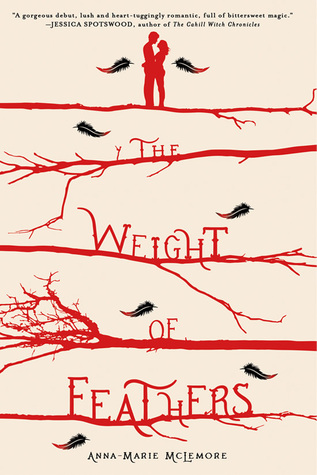
THE WEIGHT OF FEATHERS by Anna-Marie McLemore

I first heard about THE WEIGHT OF FEATHERS from some of the Sacramento Youth Services librarians. Then, as luck had it, Anna-Marie stopped by the library one day. As soon as I learned more about her and her book, I knew a feature was in order. She weaves together a beautiful story, and her touches of magic are both subtle and inspired. Have a look for yourself:

For twenty years, the Palomas and the Corbeaus have been rivals and enemies, locked in an escalating feud for over a generation. Both families make their living as traveling performers in competing shows—the Palomas swimming in mermaid exhibitions, the Corbeaus, former tightrope walkers, performing in the tallest trees they can find.

Lace Paloma may be new to her family’s show, but she knows as well as anyone that the Corbeaus are pure magia negra, black magic from the devil himself. Simply touching one could mean death, and she's been taught from birth to keep away. But when disaster strikes the small town where both families are performing, it’s a Corbeau boy, Cluck, who saves Lace’s life. And his touch immerses her in the world of the Corbeaus, where falling for him could turn his own family against him, and one misstep can be just as dangerous on the ground as it is in the trees.

Anna-Marie also answered some interview questions!

You bring a lot of richness to your writing, and your ability to seamlessly craft words together completely blew me away. Which authors were influences for you, and can you tell us more about your writing and publishing journey?

Thank you so much! So many authors of magical realism inspire me: Allende, Marquez, Coelho, Esquivel, Belli, Lorca…I come back so often to their novels, short stories, poetry, and plays. My heritage plays a role, either in the forefront or in the background, of everything I write, and I feel blessed to be able to be open about being Latina, and about being queer, in the book community. Book lovers—readers, book bloggers, publishing professionals—are such lovely people to get to know, and I’m grateful for how many I’m getting to meet!

And I'm grateful you brought this lovely book into the world! I especially loved how THE WEIGHT OF FEATHERS drew on magical realism to enhance the dynamic between the Corbeaus and Palomas as rivaling circus families. What inspired the symbolic pairing of feathers versus fins, and what do you want readers to take away from the story?

Years ago, my father told me about a mermaid show he’d seen when he was in his twenties. Ever since I’ve wanted to write a story about performing mermaids, but it wasn’t until a photographer friend had me out in the woods while wearing a set of wire and cloth wings that the idea for the book came to me. Women swimming in mermaid tails, and winged tree performers. The story grew from those two images coming together.  The Palomas are the performing mermaids, and the Corbeaus are the winged tree-climbers. But just as important as their circuses are their cultures. The Palomas are Mexican-American, and the Corbeaus are French-Romani. Lace and Cluck’s heritages are as central to their lives as their families’ professions. Lace and Cluck have to find each other and see each other even through the prejudices they’ve been taught. And that’s what I hope readers take from this story, that we have to find each other and see the beauty in each other, especially in those different from us.

Definitely--and this is even more pronounced with the dual points-of-view between Lace and Cluck. I loved the intimate insight into both families, especially Lace's. How did this develop as you wrote, and what experiences, if any, shaped the story overall?

Speaking from my own experience, when you grow up in a big, closely knit family, they’re your world. What they believe is what you believe. Lace accepts that her body should be different than it is because she and her cousins measure themselves by their older relatives’ opinions. The things our families teach us may not be what we believe throughout our lives, but they stay with us even as we define who we are.

Beautifully put. And you've captured this in really relatable ways, especially with Lace's descriptions of her "soft" body. What are some of your current projects?

I’m current working on another book that’s about new characters, but has some of the same elements as THE WEIGHT OF FEATHERS—magical realism, multicultural themes, and a small-town setting. I’ll be sharing more soon, but for now I can tell you that I’m especially excited because this book will also have LGBT themes.
Thanks so much for having me, Karen!

And thanks for being here, Anna-Marie!

To grab your own copy of THE WEIGHT OF FEATHERS, feel free to click any of the below links:


Buy:  Amazon.com ~ Barnes & Noble ~ IndieBound
          Books-a-Million ~ iBooks ~ Powell's


Wednesday, October 28, 2015

THE CHILD GARDEN by Catriona McPherson

My relationship with this book started months ago, when I first pre-ordered it on Amazon. Then, one of my colleagues mentioned that she knew Catriona, and that we happen to live near one another. Finally, Janet Reid expressed the following on her blog:

"Lee Child writes wonderful commercial fiction. Laura Lippman does too. Catriona McPherson on the other hand must be read with a notebook at hand. Whether anyone distinguishes these enormously talented writers by literary/commercial is almost immaterial. They write books people want to read."

It was clear--I had to feature THE CHILD GARDEN. And it's definitely a book you'll want to read--complete with a spooky cover just in time for Halloween:

Eden was its name. “An alternative school for happy children.”  But it closed in disgrace after a student’s suicide. Now it’s a care home, its grounds neglected and overgrown, and its only neighbour Gloria Harkness. Her son lives there, lighting up her life and breaking her heart each day.

When Gloria’s childhood friend turns up at her door, she doesn’t hesitate before asking him in. A girl from Eden is stalking him, has goaded him into meeting her at the site of the suicide.  Only when the dead begin to speak, it’s murder they say.

Gloria is in over her head before she can help it. Her loneliness, her loyalty and her all-consuming love for her son lead her into the heart of a dark secret that threatens everything she lives for.

Catriona was also kind enough to answer some interview questions!

According to your bio, you lived in Scotland before settling in California. In what ways, if any, did this influence your writing, and can you tell us more about your journey toward publication?

Yes, I lived the first forty-four years of my life in Scotland and even if I live to be eighty eight here in California, I'll always be a Scottish writer.  Readers tell me my voice is Scottish even when I'm writing straight standard English narrative. But then a Texas writer I admire - Terry Shames - sounds pure Texas on the page although she uses no dialect representation. Language has music, right? And the tune of Scottish is a stiff breeze and a choppy sea. Texas . . . isn't!

My journey to publication was back in the olden days, before ebooks and self-publishing, and I was also lucky enough to break in during a boom. 2005, when my first book came out, was a buoyant moment. It's much tougher now but I still think how I did it is worth a shot for anyone who wants a traditional publisher. I sat alone in a room and wrote a book, start to finish, edited and polished it, then sent it out to agents. After forty rejections, I put it in a drawer and wrote a different one. It worries me sometimes (not that it's any of my business!) that beginning writers have critique groups and websites and Facebook author pages before they have finished books; almost as if you can network your way to being a writer and the actual slog of writing is a technicality. (Ha! Can you tell I've got ambitions to be a grumpy old battle-axe one day? I seem to be doing some ground work.)

Trust me--the actual slog of writing is still a necessity, because the writing is what readers go back for. And speaking of going back, let's explore the start of THE CHILD GARDEN, when you sat alone in a room and it was just an idea. How did the characters come to you, and what do you want readers to take away from their stories?

Thank you. I am very fond of Gloria Harkness (the hero of the book) and I admit I fell in love with Stig a bit too. The story began with the house, actually. That lonely, ramshackle, shambolic house in the middle of nowhere. I lived in the real-life Rough House for the last ten years before moving to the US and I wanted to write away my homesickness for it. So . . . it went: Who lives there? Why? What keeps her there? What would she do to stay there? The other spark came from that experience we're many of us having these days, where a childhood friend finds you online and you feel instant trust because you knew this person when they were ten. Madness! A childhood friend is a complete stranger. Everyone was a child once . . .

This is the real-life Rough House. 
As to the second part, I honestly have no idea. Once the book is out there it's only one part of every reading experience, added to the reader, her mood, what she read last . . . I go from being a furtive control-freak about first drafts to cutting my books adrift completely once they're in readers' hands. It's fascinating to got to book groups and hear what people think, but I wouldn't argue about any of it.

Book groups can be subjective, I think. And writers can benefit from your book too--it's already challenging me to play with words in new ways, especially with the lovely turns of phrase you use, such as, "the heavier tread of hedgehog." Does this kind of texture come when drafting, editing, or both, and what do you enjoy most about crafting words together?

Well, thank you again. It's a mixture. Some lines come out right first time and stay through all the drafts. Some bits of fancy schmancy writing feel good at the time of writing but stink the fourth time I read them! Some sections of a first draft stink immediately and I sail on, knowing I can fix everything later. I like to get the first draft out, even if it's ugly, and then I know I'm not polishing bits I'm going to cut anyway. Also - no one ever sees the first draft (furtive control-freak, see above). That's very liberating.

I think I enjoy the good days of the first draft best. Second best is when I finally see what's wrong in a late draft and correct something that's been a pebble in my shoe for months.

What a wonderful analogy for drafting (and editing). What are some of your current projects?

Right now, I'm writing the first draft of what I hope might be book one in a new series. Still crime fiction but something different for me. (Can't say more, see above). I'm also waiting for the edit notes on the eleventh Dandy Gilver novel and then I'll be licking that into shape. It's set in a convent and was a lot of fun to write. I do love a nun. Then I need to do one last pass on a short story for the third Sherlock Holmes anthology, edited by Laurie King and Les Klinger. I was honoured to be asked but I'm a bit terrified now.

Ooh, I love anything Sherlock Holmes! Can't wait to see your unique touch on it. And thanks again for such a lovely interview.

If you can't want to wait for Catriona's forthcoming books, you can still buy the following:

THE CHILD GARDEN

Buy:  Amazon.com
          Barnes & Noble                   
          IndieBound
          Or click the BUY IT button


COME TO HARM

Buy:  Amazon.com                     
          Barnes & Noble   
          IndieBound
          Or click the BUY IT button


THE DAY SHE DIED

Buy:  Amazon.com                     
          Barnes & Noble   
          IndieBound
          Or click the BUY IT button


AS SHE LEFT IT

Buy:  Amazon.com                   
          Barnes & Noble 
          IndieBound
          Or click the BUY IT button


You can also discover (or re-discover) the Dandy Gilver series.

Bio:

Catriona McPherson is the author of a multi-award-winning series of preposterous detective stories, set in her native Scotland in the 1920s and featuring the gently-born lady detective, Dandy Gilver. She also writes a strand of darker (that’s not difficult) stand-alone suspense novels, which have won two Anthonys and been shortlisted for an Edgar. THE CHILD GARDEN is the latest. Catriona immigrated to America in 2010, and lives in the hills west of Davis with a black cat and a scientist. She is second-generation librarian on her mother’s side.

www.catrionamcpherson.com


Wednesday, October 21, 2015

A SKY UNBROKEN by Megan Crewe

A few months back, I featured the Earth & Sky series by Megan Crewe. A SKY UNBROKEN, the final in the series, debuted October 13, and while I'm sorry the series is ending, this cover has to be my favorite so far. Have a look:

From Goodreads:

The rebels have been disbanded, their plans ruined. Betrayed by those she trusted most, Skylar finds herself herded, along with a small group of Earthlings, into a living museum—a human zoo—on the Kemyates’ space station, subject to her captors’ every whim. Any move Skylar makes could result in the extinction of her people—but giving in means losing any hope of freedom.

Meanwhile, Win returns home and evades punishment by pretending to be loyal to Kemya. But he can’t bear knowing that Skylar is imprisoned or watch his fellow Kemyates swallow the Council’s lies about Earth. He must bring the truth to the Kemyate public and see the Earthlings freed—even if it means openly challenging his world’s rulers.

In this final book of the action-packed Earth & Sky trilogy, neither Skylar nor Win knows they are about to uncover an even deeper conspiracy—one that could push the future they’re fighting for completely out of reach.

Megan was also kind enough to answer some follow-up interview questions!

A SKY UNBROKEN imprisons Skylar in the Kemyates' living museum. Very intriguing! What about this setting was most interesting to work with, and how did it develop as you wrote it?

The idea of humans being placed in an alien "zoo" is something I've seen a few times in science fiction, and I toyed with it when I was first brainstorming the larger idea that became the Earth & Sky trilogy. Because of the directions the rest of the story and world-building went in, particularly given the Kemyates' fascination with Earth history, what ended up making the most sense was having that "zoo" be devoted solely to Earthlings from different time periods. It made for a great reveal and way to shock my main character when she discovers it while exploring the space station in THE CLOUDED SKY, and I hoped made it completely clear just how little respect most Kemyates had for Earthlings. Getting to put Skylar right into that setting in A SKY UNBROKEN was a lot of fun and also a challenge.

I think what was most interesting was figuring out how such a place would work. How self sufficient would the Kemyates be able to allow the inhabitants to be? How would they keep them from realizing just how trapped (and how far from home) they were? What aspects of Earth life would they not be able to replicate perfectly, that would disconcert their prisoners? Figuring out what plot points I needed to have happen around Skylar's imprisonment there also helped me flesh out her particular situation in the exhibit.

Interesting! And I really admire the masterful way you used world-building to enhance Skylar's character development. In our last interview, you mentioned the challenges of fitting a novel-sized idea into a short story container. In what ways, if any, have you found this useful in your current writing?

I think that early practice trying to write effective short stories taught me a lot about making maximum use of the words I have. Getting across information through subtext rather than spelling everything out. Avoiding starting scenes too early and ending them too late.  Picking the right place to begin the entire story rather than including unnecessary lead-up. It also gave me a lot of practice at figuring out what I found most gripping about a particular idea and focusing in on that. Even though I never really took to short story writing, it was definitely not wasted time or effort.

Definitely not--and it proves that no words are ever wasted. Now that the Earth & Sky trilogy is complete (boo) what's next on the horizon?

I still don't have anything definite lined up in terms of new books, though I hope to have news of one sort or another by the end of the year.  I can reveal that I'm re-releasing my out of print debut novel, GIVE UP THE GHOST, in December, with a new cover I'm quite pleased with. I know a lot of readers only "discovered" my books with the Fallen World trilogy or later, and I hope the re-release will bring GHOST to a larger audience!

Can't wait! Thanks for another excellent interview!

To get the books in the Earth & Sky series for yourself, click any of the links below:


Buy:  Amazon.com
          Barnes & Noble                     
          IndieBound


Buy:  Amazon.com                     
          Barnes & Noble   
          IndieBound


Buy:  Amazon.com                     
          Barnes & Noble   
          IndieBound

Wednesday, October 14, 2015

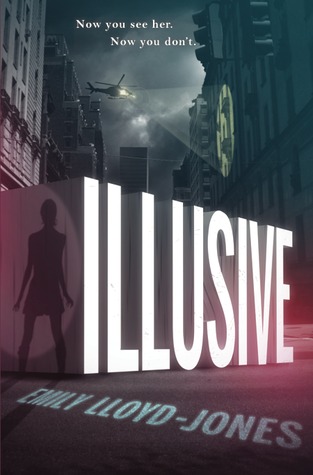
DECEPTIVE by Emily Lloyd-Jones (second in the Illusive series)

I first discovered DECEPTIVE when I saw it on one of the book carts near my desk. The cover was so intriguing that I had to find out more, so I contacted Emily for an interview. Come to find out, DECEPTIVE is second in the Illusive series, the premise for both books will blow your mind:

From Goodreads:

You don’t belong with us. These are the words that echo through the minds of all immune Americans—those suffering the so-called adverse effects of an experimental vaccine, including perfect recall, body manipulation, telepathy, precognition, levitation, mind-control, and the ability to change one’s appearance at will.

When immune individuals begin to disappear—in great numbers, but seemingly at random—fear and tension mount, and unrest begins to brew across the country. Through separate channels, super-powered teenagers Ciere, Daniel, and Devon find themselves on the case; super criminals and government agents working side-by-side. It’s an effort that will ultimately define them all—for better or for worse.


When the MK virus swept across the planet, a vaccine was created to stop the epidemic, but it came with some unexpected side effects. A small percentage of the population developed superhero-like powers. Seventeen-year-old Ciere Giba has the handy ability to change her appearance at will. She's what's known as an illusionist...She's also a thief.

After a robbery goes awry, Ciere must team up with a group of fellow super-powered criminals on another job that most would consider too reckless. The formula for the vaccine that gave them their abilities was supposedly destroyed years ago. But what if it wasn't?

The lines between good and bad, us and them, and freedom and entrapment are blurred as Ciere and the rest of her crew become embroiled in a deadly race against the government that could cost them their lives.


Emily was also kind enough to answer some interview questions:

According to your bio, you work in a bookstore by day and write by night. What sort of work-life balance have you established, and do you find that your day job feeds your creativity? 

I love my day job because it lets me keep my finger on the pulse of the industry. I see a lot, and I do mean a lot, of books. I see how booksellers react to them and how customers react to them. And while none of this feeds my creativity, it does feed my business sense. I think being a bookseller has made me a better writer simply because I’ve been exposed to so many books. I learn a lot from reading. Also, booksellers are amazingly fun people to work with - independent, creative, and usually a little sarcastic.

On the writing side of of things, my work-life balance tends to be... less balance and more chaos. When I’m in the throes of writing a new book, I tend to let things like housework, cooking, and all other non-work responsibilities fall by the wayside. At this moment, there is a pile of laundry atop my couch because I haven’t had time to fold it.

I know exactly what you mean! At least books are always there, no matter what state of array our lives happen to be in.
Since DECEPTIVE is the second in the Illusive series, how did the the story develop with this new installment, and what advice, if any, do you have for writing sequels?

The story developed by way of the characters. The characters grew up a lot in the second book and the plot itself became more mature as a result. One thing I relished in the second book is this: I didn’t pull my punches when it came to the characters. Maybe it makes me a terrible person, but I love creating characters and watching them deal with impossible situations.

The best advice I can give to people attempting to write a sequel is this: make friends. Have very good writer friends who know what you’re going through, who are willing to beta your work on a moment’s notice, who will listen to you moan for hours at a time and then offer good advice. In my experience, first books are written alone while sequels require a bit of a group effort.

Definitely a good way to ensure things remain consistent. Speaking of consistency, I love your website! What went into the design concept, and do you have tips for authors wanting to establish an online platform?

Oh, thank you! I designed it myself. Once in a while my art minor comes in handy. I wanted a web presence that would reflect my books - which in this case is a moody cityscape. I think one of the key parts of establishing a web presence is keeping things simple and consistent. I try to make myself easy to find and accessible on places like Twitter and Tumblr. I also try to conserve my social media energy to those two outlets because there is only so much I can handle in one day. Actually, my Twitter has been a little neglected lately because I’ve been throwing myself into my writing.

Simplicity is definitely best! And rest assured, Twitter won't go away any time soon. What are some of your current projects?

My current project is a standalone YA novel due out in spring of 2017. It’s called THE HEARTS WE SOLD and it’s about misfit teenagers, Faustian bargains, Lovecraftian monsters, and how far a person will go to achieve their greatest desire.

Sounds wonderful! Thanks for such a great interview!

To get your hands on Illusive, Deceptive, or Murder on the Disoriented Express, the companion to both titles, feel free to click the links below:


Buy:  Amazon.com                     
          Barnes & Noble   
          IndieBound


Buy:  Amazon.com                     
          Barnes & Noble   


Buy:  Amazon.com                     
          Barnes & Noble   
          IndieBound

Wednesday, October 7, 2015

THE DEATH AND LIFE OF ZEBULON FINCH, VOLUME ONE: AT THE EDGE OF EMPIRE by Daniel Kraus

I was fortunate enough to meet Daniel Kraus at ALA a few months back, and as soon as I heard the premise for both volumes of THE DEATH AND LIFE OF ZEBULON FINCH, I knew a blog feature was in order. AT THE EDGE OF EMPIRE is the first of the two, with a street date of October 27. I also ordered plenty of copies for the Sacramento Public Library.

From Goodreads:

May 7, 1896. Dusk. A swaggering seventeen-year-old gangster named Zebulon Finch is gunned down on the shores of Lake Michigan. But after mere minutes in the void, he is mysteriously resurrected.
His second life will be nothing like his first.

Zebulon's new existence begins as a sideshow attraction in a traveling medicine show. From there, he will be poked and prodded by a scientist obsessed with mastering the secrets of death. He will fight in the trenches of World War I. He will run from his nightmares—and from poverty—in Depression-era New York City. And he will become the companion of the most beautiful woman in Hollywood.

Love, hate, hope, and horror—Zebulon finds them. But will he ever find redemption?


Ambitious and heartbreaking, The Death & Life of Zebulon Finch, Volume 1: At the Edge of Empire is the epic saga of what it means to be human in a world so often lacking in humanity.

Daniel was also kind enough to answer some interview questions:

In addition to being an author, you're also a filmmaker. What do you like most about working in both mediums, and how do they supplement one another? 

I like filmmaking because of editing: the strenuous work is done and the rest is just like doing a puzzle. It's fun, involving, even relaxing in a way. Back in the day of cutting on film, it was something else altogether, but today you can experiment with approaches, then throw it all away if it doesn't work. What I don't like in filmmaking is what I like in writing: I don't like large-group collaborations. They can bring you a lot of social energy but, for me, they dilute what you're trying to do. In writing, I can go as far as I want as hard as I want.

Indeed you have. And I love the macabre in AT THE EDGE OF EMPIRE, as well as Zebulon's cynical way of looking at the world. Where did the idea for the story come from, and what do you want readers to take away when they're finished?

The story dates back 20 years and evolved. It almost served as a bulletin board over the years: whenever I had big ideas that didn't fit elsewhere, more often than not they'd fit into this giant project. I hope readers are challenged by it. I hope it makes them think about ideas of good and evil, and what we're willing to accept when it comes to our survival, or the survival of our community, or the survival of our country. It's big stuff, I know, but, you know, it's a big book.

Further proof that there are no wasted words. And speaking of big books, I'd like to mention TROLLHUNTERS, your collaboration with filmmaker Guillermo del Toro. How did this come about, and in what ways, if any, did the collaboration shape the story?

Guillermo was a fan of my book ROTTERS and had the idea for TROLLHUNTERS and so invited me up to Toronto to talk about it. The original idea was his, so the question is really what did I bring to it? And I think that was a sort of grittiness and a wildness, things at which I try to excel. I also think I am good at texture. There were certainly times where Guillmero would have a brilliant idea but the question was how to make it feel real, you know? That's what I love more than anything: taking stuff that shouldn't work because it's too dark or absurd and make it work anyway.

Your use of texture is what I studied most in your scenes, especially the way it breathed life into your stories and characters. Besides EMPIRE DECAYED, the second volume in Zebulon's story, what are some of your current projects?

Some really incredible stuff is happening but I can't say anything about it, because what if it all falls apart? Then we'll all be sad.

Oh no. Don't bring the sad. Let's just show all the lovely people where they can get your books, including ROTTERS, TROLLHUNTERS, and of course AT THE EDGE OF EMPIRE:


Pre-order: Simon & Schuster
                 Amazon.com
                 Barnes & Noble
                 IndieBound


Buy:  Amazon.com
          Barnes & Noble
          IndieBound


Buy:  Penguin Random House
          Amazon.com
          Barnes & Noble
          IndieBound


Buy:  Penguin Random House
          Amazon.com
          Barnes & Noble
          IndieBound


Buy:  Penguin Random House
          Amazon.com
          Barnes & Noble
          IndieBound


For more information, you can also visit www.danielkraus.com. 


Wednesday, September 30, 2015

SANCTUARY by Jennifer McKissack

I first found Jennifer McKissack on Facebook, and after reading the gothic novel Rebecca, the premise of SANCTUARY was too compelling to resist. Even better, SANCTUARY debuted just yesterday!


From Goodreads:

After the untimely death of her aunt Laura, Cecilia Cross is forced to return to Sanctuary, a rambling, old French-Gothic mansion that crowns a remote island off the coast of Maine. Cecilia is both drawn to and repulsed by Sanctuary. The scent of the ocean intoxicates her, but she's also haunted by the ghosts of her past--of her father who died at Sanctuary five years ago, and of her mother who was committed soon after. The memories leave Cecilia feeling shaken, desperate to run away and forget her terrible family history.

But then a mysterious guest arrives at Sanctuary: Eli Bauer, a professor sent to examine Sanctuary's library. Cecilia is intrigued by this strange young man who seems so interested in her -- even more interested in her than in the books he is meant to be studying. Who is he and what does he want? Can Cecilia possibly trust her growing feelings for him? And can he help her make peace with her haunted, tragic past?


Jennifer also answered some interview questions!

According to your Twitter bio, you are represented by Tricia Lawrence at Erin Murphy Literary. How did you know that Tricia was the right agent for you, and can you tell us more about your journey toward publication? 

Trish and I bonded immediately over REBECCA. Before I even prompted her, she mentioned in our first phone call that REBECCA was one of her favorite books and SANCTUARY reminded her of it. I knew then she was the agent for me. Trish is a gifted agent. She immediately came up with ways to make SANCTUARY a stronger book (also giving it the new title!), and I revised before she submitted.

Being newer to REBECCA, (I read it last year) I can only imagine the complexity it can reveal when you sit with it for an extended period of time. In what ways was SANCTUARY influenced by the Gothic, and what do you want readers to take away when they're done with the story?

I've read REBECCA again and again. I first read the book as a teen and fell in love with it. With SANCTUARY, I wanted to capture that same sense of place and of mood, and romance too, and also the way the past can haunt and seduce. I wanted to create a vulnerable heroine, but one with courage. SANCTUARY isn't a retelling; it was a way for me - as a writer - to explore those things I enjoyed so much about Daphne du Maurier's classic.

SANCTUARY definitely has its own voice! I also love the cover art. In what ways do you feel it represents the story and what Cecelia faces?

One of the themes of SANCTUARY is the complicated longing we can feel for the home of childhood. Was it as I remember? Why do I long for something that also brought sadness? Do I want to return to it? It's what Cecilia wants and feels. I think the cover captures her longing and hesitation really well.

Definitely a feeling I can relate to, having just returned to my home state for the first time in ten years! What are some of your current projects?

I'm working on two more novels: another YA Gothic, this one set in Scotland, and a YA high fantasy.

Sounds amazing--especially the one based in Scotland! Thanks Jennifer, for such great answers.

Get copies of SANCTUARY here:


Wednesday, September 23, 2015

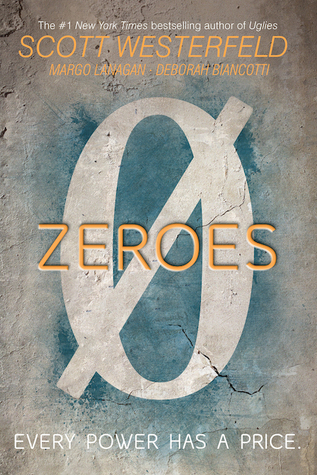
ZEROES by Scott Westerfeld, Margo Lanagan, and Deborah Biancotti

I first became a fan of Scott Westerfeld after I read UGLIES, and when I saw an ARC of ZEROES at BEA this year, I couldn't wait to read it, especially when I found out the other points-of-view were written by Margo Lanagan and Deborah Biancotti. ZEROES will debut September 29, and I've already ordered a truckload for the Sacramento Public Library.

From Goodreads:

Ethan, aka "Scam," has a way with words. When he opens his mouth, whatever he wants you to hear comes out. But Ethan isn't just a smooth talker. He has a unique ability to say things he doesn't consciously even know. Sometimes the voice helps, but sometimes it hurts - like now, when the voice has lied and has landed Ethan in a massive mess. So now Ethan needs help. And he needs to go to the last people who would ever want to help him - his former group of friends, the self-named "zeros" who also all possess similarly double-edged abilities, and who are all angry at Ethan for their own respective reasons. Brought back together by Scam's latest mischief, they find themselves entangled in an epic, whirlwind adventure packed with as much interpersonal drama as mind-bending action.


Scott, Margo and Deborah were also kind enough to answer some interview questions:

You've described writing as a social process. How did the three of you come to write together, and how did you divide the character stories among yourselves?

Margo: Scott and Deborah got together first through their shared interest in superpowers and Deb’s enthusiasm for the idea of the television Writers’ Room. They wanted to write in that kind of team environment, taking advantage of the conversational, brainstormy, and even cheerfully competitive parts of their brains. Partly I guess they thought it'd make the writing more efficient and partly they wanted to enjoy the spectacle of stories being pushed to their limits by the energy in the room.

But they realized that two people do not a team make, so they asked me along for the ride. And it was only at our second meeting or so that Scott suggested that I should take on two particular characters—and I got so busy thinking about them that I don’t remember how the other four were divvied up...

Deb: We came up with all six characters and then Scott said, 'Deb, you take [redacted] and [redacted]'. To which I replied, 'Ace!' (Note that in Australian, ace means 'why, that's excellent, thank-you very much'.) So then we started working out the personalities of our character and negotiating how they would all fit together.

Scott: We outline together, in the same room, arguing how the story will go. But once the outline is solid, we retreat to our separate houses (and separate continents, sometimes!) to write the chapters. Everything gets written out of order this way, so it's all a jumble that has to be put back together. But that means that each chapter gets to be like its own little story as well.


It definitely fits together like complete parts to a whole, and I found it fascinating how the superpowers increased the more the characters were around others. How did this concept develop, and how did it affect the characters and the development of the plot?

Margo: That feature of the powers was there pretty much from the beginning as a way to unify the powers, and make them more varied. Sometimes there just wouldn’t be enough of a crowd for Flicker to find a pair of eyes, for example, or to make Anonymous forgettable. And sometimes there’d be way too many people around, and teens with poor impulse control would suddenly have massive powers to do stupid things with. It taught the characters about the dangers of their powers, also the potential, and added good scary and anxious-making possibilities to a lot of the scenes.

Deb: The social superpowers aspect originally came from Scott. We were riffing on the idea that people born in the year 2000—supposedly the year of the great Y2K computer meltdown—would have very different experiences growing up to what we'd experienced. For a start, there's the internet, and all the social advantages that presents. Advantages, and dangers.

Scott: Collaboration is the human superpower. Humans can't fly on our own, but when tens of thousands of us design aircraft and build airports and create air-traffic control systems, flying becomes easy. So it made sense to us that all these superpowers would come from the crowd.

It's sort of like Twitter: if you're alone on it, Twitter's nothing. With a hundred friends, it makes the Oscars funnier to watch. And with a million people? You've got the Arab Spring.


So true. It also comes out in characters' voices--particularly Ethan's. In writing multiple points of view, how were you able to keep the characters' voices so distinct? Did some voices come more easily than others?

Margo: Collaborating meant that we had three distinct writing voices at our disposal to start with. We definitely wanted the powers to be very distinct from each other, too, and we wanted to show how each power had formed each character as they fought to deal with its consequences. That made it pretty obvious where the voices diverged.

Some voices did come easier than others. For instance, we spent a lot of energy early on getting Anon to stop fussing like a nervous grandpa and start being broodingly romantic instead.

Deb: We're not admitting who wrote which character yet, so it's hard to comment specifically on this. But in my experience the voices came relatively easily initially, simply as a result of *thinking* our ways into each character. How would it *feel* to be Scam, for example? How would it feel to be Flicker or Crash or Anon?

The funny thing was presenting our initial character sketches to each other (word sketches, not illustration sketches) and being surprised by the insights. Like, when I first presented [redacted] to Scott and Margo, they both agreed the character was kinda [redacted], but in a good way. So I ran with it, made that character as [redacted] as I could. My other character was considered to be way more [redacted], which was good news, but turned out to be way harder to write.

Scott: Oh, Deb. You're such a [redacted].

For me, what makes these characters distinct is the powers themselves. Scam's voice speaks for him, Flicker sees through others' eyes, Crash feels technology like it’s insects in her brain. All of these powers change the way that point of view works and the way that language works. Our objective was to make the way these six characters see the world not only different from each other, but also from any other person the reader has ever met.


You’ve definitely succeeded. What are some of your current projects? Will there be future collaborations?

Margo: We’re just finishing off Book 2 of Zeroes, and expect to be busy with Book 3 until the end of next year. My solo projects include two fantasy novels and the odd short story.

We’ll have to see how we weather the entire trilogy before we know whether we’ll collaborate again, though we’re kicking along okay together right now. Collaboration is pretty addictive; solo writing feels very lonely and laborious by contrast!

Deb: I'm playing with some solo novel ideas in my spare time, getting thoughts and research and very rough words down on the page. I've collaborated a few times on smaller projects and I'd definitely like to collaborate again. It's occasionally exhausting but more often it's inspiring and stimulating and invigorating. I recommend it for writers who want to be stretched.

Scott: On top of Zeroes 2 and 3, I have a graphic novel coming out next year, called Spill Zone. It's about a young artist who sneaks into an alien visitation site to take photographs. This art is both illegal and very personal, as both her parents disappeared during the visitation. Here's more:


For more information on Scott's other books, click here.

For Margo's other books, click here.

For Deborah's other stories and novellas, click here.