Wednesday, December 26, 2018

LOU LOU AND PEA AND THE BICENTENNIAL BONANZA by Jill Diamond

I first fell in love with the Lou Lou and Pea series back in 2016, and I first featured it here. This newest installment finds the girls planning a big party in their neighborhood of El Corazón:

BFFs Lou Lou Bombay and Peacock Pearl are busy preparing for the Bicentennial Bonanza, their city's two-hundredth birthday bash! And this year, the party will take place in their beloved neighborhood of El Corazón. With a baking contest, talent show, and a new gazebo planned, the community can't wait to celebrate the founders (and historical BFFs), Diego Soto and Giles Wonderwood. But when Vice-Mayor Andy Argyle claims the festivities belong to Verde Valley, using a mysterious diary as evidence, Lou Lou and Pea smell trouble. Will the friends be able to uncover the secrets of their city's founding, and bring the Bonanza back to El Corazón?

Fun back matter includes a DIY garden party hat and a Spanish language glossary!

In our January 2017 interview, you said you were working on LOU LOU AND PEA AND THE BICENTENNIAL BONANZA. What, if anything, about the story has changed since then? 

At that point, the story was generally in its near-final form as far as plot was concerned. But, it definitely went through a lot of shining and polishing before it was published in April of 2018, not to mention Lesley adding her fabulous illustrations. I think I also fell more in love with the book as the publication process moved forward. Since, the first book, LOU LOU AND PEA AND THE MURAL MYSTERY, was my debut, I was attached to that story from the get-go, but with BONANZA, I grew to adore the story more and more as it became more familiar to me. Now, I love BONANZA and MURAL equally.

And it shows the unexpected ways that plot can develop during a polish! I also love how the Lou Lou and Pea books contain back matter like a DIY garden party hat and other crafting activities. Who comes up with the ideas for this content, and what do you like most about it? 

It's a collaborative effort, with my wonderful editor at FSG, Grace Kendall, doing a lot of the work. She was the genius behind the hat craft and the flower crown and even field tested the crafts with her younger cousins! I really like the fact that the crafts give readers a chance to essentially become part of the LOU LOU AND PEA world. A hands-on experience that brought me closer to a characters and a story is exactly the sort of thing I would have loved as a kid reader so I was delighted to include these things in the LOU LOU AND PEA books.

Excellent. If you could tell your younger writer self one thing, what would it be and why?

That I would publish a book one day, so keep writing! Although, my younger self was way more confident and consistent as a writer so I probably would have said, "DUH!" whereas my adult self would say, "No way, really?" I took a long break between being a very prolific young kid writer and not writing much as an adult. If I'd known that writing would turn into a beloved career for me, maybe I would have started earlier in adulthood and had time to learn more about craft prior to writing my first book.


Buy: BookPassage Amazon.com Barnes & Noble ~  IndieBound


Buy: BookPassage ~ Amazon.com Barnes & Noble ~  IndieBound


This post can also be viewed here.

Wednesday, December 19, 2018

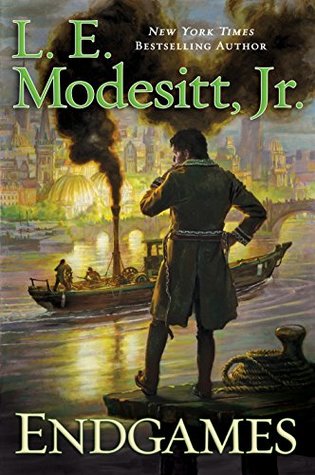
ENDGAMES by L.E. Modesitt, Jr.

I had the privilege of meeting L.E. Modesitt, Jr. at this year's WorldCon. I started reading IMAGER, the first in the Imager Portfolio series, and was immediately pulled into the story. The latest book in the series, ENDGAMES, will come out in February 19.


Solidar is in chaos.

Charyn, the young and untested ruler of Solidar, has survived assassination, and he struggles to gain control of a realm in the grip of social upheaval, war, and rioting. Solidar cannot be allowed to slide into social and political turmoil that will leave the High Holders with their ancient power and privilege, and the common people with nothing.
But the stakes are even higher than he realizes.

The Imager Portfolio:
#1 Imager / #2 Imager’s Challenge / #3 Imager’s Intrigue / #4 Scholar / #5 Princeps / #6 Imager’s Battalion / #7 Antiagon Fire / #8 Rex Regis / #9 Madness in Solidar / #10 Treachery’s Tools / #11 Assassin’s Price / #12 Endgames


What originally brought you to the genre of science fiction?

 When I was in grade school we lived south of Denver in a semi-rural suburb across the street from a forty acre cattle farm.  The nearest commercial establishment with reading material was close to two miles away, and the nearest library was four miles.  In my parents’ bedroom, however, was a three-shelf gray bookcase in which my mother kept all her science fiction paperbacks. They were much more appealing to me than my father’s law books and his beloved books by Somerset Maugham.  So I started reading them… and I kept reading SF through high school and college.

I never intended to write speculative fiction of any sort.  In college I worked on my poetry and was fortunate enough to study under William Jay Smith, who was later named U.S. Poet Laureate, and Clay Hunt, who offered the first truly critical assessments of my poetry, which provided the structure that I’ve used ever since in dealing with editors, and which can be simply stated as “tell me everything you find wrong with what I wrote, and then let me fix it.”

I was less than moderately successful as a poet, possibly because I tend to favor rhyme and meter, which have hardly been in vogue in the last 50 years, and was rejected by the Yale Younger Poet contest every year until I was too old to be a younger poet.  At that point, my first wife suggested that I might try writing science fiction, given that I’d read so much of it.  I did, and while my first submission was to ANALOG, and was kindly rejected by Ben Bova, he did allow me to fix it, based on his comments, and it was published, as I recall, in March of 1973.  Matters weren’t as easy after that, and I only sold about six stories out of close to a hundred that I wrote over the next five years. Then Ben Bova rejected another story and told me not to send him any more until I wrote a novel, because it was clear to him that I was a novelist trying to cram novels into story lengths.

After I wrote my first novel, since I had no agent, I submitted it to pretty much all the SF publishers I knew about, and after about two years, David Hartwell finally bought The Fires of Paratime for the Timescape imprint of Simon & Schuster. I’ve since sold every novel I’ve written, so far at least.


That's wonderful! ENDGAMES, the next book in The Imager Portfolio series, is set to release in February 2019. What do you want readers to know about this newest installment?

ENDGAMES is the sequel to ASSASSIN’S PRICE, and the last book about Charyn, the young ruler who unexpectedly came to power and who faces the turmoil of dealing with what amounts to the industrial revolution, the equivalent of the Reformation, and a civil war, all at once, in a world where the talent of imaging objects into being is held by a select few, of whom Charyn is not one.  And, oh, yes, Charyn also needs a wife and an heir, in the worst way possible, in order to provide political stability.


I can't wait to see how Charyn confronts these challenges! THE OUTCASTS OF ORDER is the latest in another of your series, The Saga of Recluce. In what ways, if any, did this story expand on the world you've already built?

The books in the Recluce Saga span more than 2,000 years and countries in five separate continents.  They’re the tales of individuals set in epic times, but they’re not really epic fantasy because the focus is on the individual, not the epic. Also, I didn’t write them in chronological order, because my mind doesn’t quite work that way.  In the first 19 books, no character occupies more than two books as the protagonist, and sometimes only a single book.

THE MONGREL MAGE was the twentieth book and began the story of Beltur, a very unaccomplished chaos mage who discovers that his problems lie in the fact that he’s really not a chaos mage at all, but an order mage. The events leading to this discovery require him to flee his homeland of Gallos to the neighboring country of Elparta, where he is initially more welcome. (In the interest of not providing spoilers, I’m, omitting all the exciting parts and battles.) In OUTCASTS OF ORDER, Beltur discovers that his romantic interest in an attractive young healer, among other things, makes him unwelcome to the mages of Elparta, and he and his love are again forced out of one country, and then another. These two books, along with the third book about Beltur [THE MAGE-FIRE WAR, coming next August from Tor], show the growing tensions between order and chaos mages that fuel the conflicts of the next thousand years, as depicted in eleven already-written books, and lead to the creation of the order-ruled isle of Recluce  and the glorious white city of Fairhaven, ruled by chaos mages.

Sounds like a rich world with lots of possibilities. What are some of your current projects?

I tend to focus on one book at a time.  I’ve just recently turned in the final version of a very, very, far future science fantasy stand-alone entitled, QUANTUM SHADOWS, or Forty-Five Ways of Looking at a Raven.  Now, I’m working on another Recluce novel, which takes place some sixteen years after THE MAGE-FIRE WAR, and has a different character as protagonist.
After that?  We’ll just have to see.


Buy: BookPassage Amazon.com Barnes & Noble ~  IndieBound


Buy: BookPassage Amazon.com Barnes & Noble ~  IndieBound


For more books by L.E. Modesitt, Jr, visit his website: http://www.lemodesittjr.com/the-books/

This post can also be viewed here

Wednesday, December 12, 2018

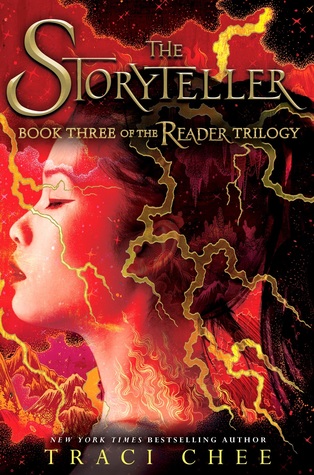
THE STORYTELLER, Book Three of The Reader Trilogy by Traci Chee

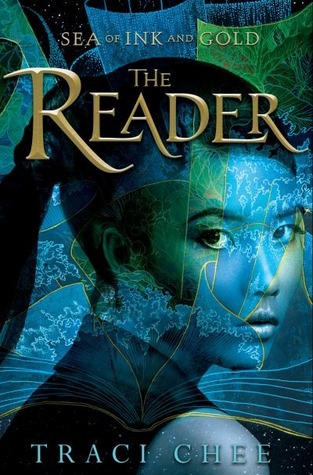
I have loved featuring this series. It's one of my favorites, not just because of the amazing cover art but because of the brilliant way Traci Chee weaves her stories together. While I'm sorry to see the end of this series, I can't wait to see what Traci writes next.

Sefia is determined to keep Archer out of the Guard's clutches and their plans for war between the Five Kingdoms. The Book, the ancient, infinite codex of the past, present and future, tells of a prophecy that will plunge Kelanna in that bloody war, but it requires a boy—Archer—and Sefia will stop at nothing to ensure his safety. The Guard has already stolen her mother, her father, and her Aunt Nin. Sefia would sooner die than let them take anymore from her—especially the boy she loves.

But escaping the Guard and the Book's prophecy is no easy task. After all, what is written always comes to pass. As Sefia and Archer watch Kelanna start to crumble to the Guard's will, they will have to choose between their love and joining a war that just might tear them apart.

Having barely escaped the clutches of the Guard, Sefia and Archer are back on the run, slipping into the safety of the forest to tend to their wounds and plan their next move. Haunted by painful memories, Archer struggles to overcome the trauma of his past with the impressors, whose cruelty plagues him whenever he closes his eyes. But when Sefia and Archer happen upon a crew of impressors in the wilderness, Archer finally finds a way to combat his nightmares: by hunting impressors and freeing the boys they hold captive.

With Sefia’s help, Archer travels across the kingdom of Deliene rescuing boys while she continues to investigate the mysterious Book and secrets it contains. But the more battles they fight, the more fights Archer craves, until his thirst for violence threatens to transform him from the gentle boy Sefia knows to a grim warrior with a cruel destiny. As Sefia begins to unravel the threads that connect Archer’s fate to her parents’ betrayal of the Guard so long ago, she and Archer must figure out a way to subvert the Guard’s plans before they are ensnared in a war that will pit kingdom against kingdom, leaving their future and the safety of the entire world hanging in the balance.


Once there was, and one day there will be. This is the beginning of every story.

Sefia lives her life on the run. After her father is viciously murdered, she flees to the forest with her aunt Nin, the only person left she can trust. They survive in the wilderness together, hunting and stealing what they need, forever looking over their shoulders for new threats. But when Nin is kidnapped, Sefia is suddenly on her own, with no way to know who’s taken Nin or where she is. Her only clue is a strange rectangular object that once belonged to her father left behind, something she comes to realize is a book.

Though reading is unheard of in Sefia’s world, she slowly learns, unearthing the book’s closely guarded secrets, which may be the key to Nin’s disappearance and discovering what really happened the day her father was killed. With no time to lose, and the unexpected help of swashbuckling pirates and an enigmatic stranger, Sefia sets out on a dangerous journey to rescue her aunt, using the book as her guide. In the end, she discovers what the book had been trying to tell her all along: Nothing is as it seems, and the end of her story is only the beginning.


In our last interview, you talked about the importance of trying to make dreams a reality. What have you found is the best way to cope when dreams don't play out as planned?

I tell myself they aren’t a reality yet. 😉


That's a good way of looking at it! THE STORYTELLER is the last installment of The Reader trilogy. What will you miss most about this world you've created?

It hasn’t really hit me that I’m truly leaving this world behind, but the longer I go without writing it, the more I realize that I’ll never spend time with Sefia or Archer again. I’ll never sail the ocean with Captain Reed and the Current of Faith. And I’m beginning to realize, the longer I’m away from these characters, that I’m going to miss them quite dearly. They lived in my head for ten years--some, like Captain Reed, for longer--and now they’re just… gone. I like to imagine that they’re having new adventures, somewhere in that wide world of untold stories, or, perhaps, having new adventures with new readers who are just discovering them for the first time.


And Captain Reed is definitely worth discovering!  I love "Pure Unmodified Doubts." Where did the idea to bottle rejections come from?

Doubts is an art book made of all the rejections I racked up before I published The Reader in 2016. I printed them on tissue paper, rolled them up into pill capsules, and stuck them in a vintage medicine bottle “for the immediate reduction in self worth. Indispensable to the working writer.” I first got the idea when I started trying to find an agent with The Reader, and the rejections kept coming in… and coming in… and coming in… and the more the rejections piled up, the smaller and more powerless I felt. I couldn’t write anymore. It all seemed so… hopeless.

So I decided to take my power back. I turned all the creative energy that I wasn’t using on writing and put it into this project. Something that would help me take the power out of the rejections and reclaim it for myself. Something weird and booky and full of joy.

Because rejections are bitter medicine, but they’re also part of the job. They’re proof that I’m doing this. I’m trying. There’s something really empowering about that, I think, and Doubts is a reminder of that.


Indeed it is. If you could tell your younger writer self one thing, what would it be and why? 


“I know it’s not your strong suit, but try to be patient, especially with yourself. Try not to stress. And try to celebrate every step of the journey, because every step is leading you where you need to go.”


Buy: BookPassage ~ Amazon.com Barnes & Noble ~  IndieBound


Buy: BookPassage ~ Amazon.com Barnes & Noble ~  IndieBound


Buy: BookPassage Amazon.com Barnes & Noble ~  IndieBound


This post can also be viewed here

Wednesday, December 5, 2018

WHAT THEY DON'T KNOW by Nicole Maggi

I've been a fan of Nicole's ever since she wrote her Twin Willows series. I also featured her here and here. Her newest book, WHAT THEY DON'T KNOW, came out in October 2018:

Three secrets. One decision. A friendship that will change everything.

Mellie has always been the reliable friend, the good student, the doting daughter. But when an unspeakable act leads her to withdraw from everyone she loves, she is faced with a life-altering choice―a choice she must face alone.

Lise stands up―and speaks out―for what she believes in. And when she notices Mellie acting strangely, she gets caught up in trying to save her...all while trying to protect her own secret. One that might be the key to helping Mellie.

Told through Mellie and Lise's journal entries, this powerful, emotional novel chronicles Mellie's struggle to decide what is right for her and the unbreakable bond formed by the two girls on their journey.


In our last interview, you said, "I can't stay away from writing fantasy." What is it about fantasy that keeps you excited about writing it?

The first books I fell in love with as a reader were fantasy. Tamora Pierce, Jane Yolen, Lois Duncan (whose books were more supernatural, but still with had those fantastical elements)...to name a few. I fell in love with them because they created worlds that I wanted to escape into. And that's what I want to do for my readers. I want to give them a place they can escape into. And selfishly, *I* want to escape into another world while I'm writing, too! I feel like when I write fantasy I'm stretching my imagination to its absolute limits. I can feel that imagination muscle working; it's like going on a really strenuous but then you get to the top and it's the most amazing view.

I know exactly what you mean! And I love how WHAT THEY DON'T KNOW is told through journal entries. How did you know this was how Mellie and Lise's stories needed to be told?

I didn't at first. I wrote more than 35,000 words over the course of six months in the more traditional narrative format, and it was crap. Every day I got up and dreaded writing. It was awful. I couldn't figure out who exactly these girls were, and there was pages and pages of endless unnecessary dialogue.

Then one day, my husband suggested that I try writing it in journal format. That suggestion sparked a memory; in college, I'd kept a journal for one of my acting classes and had to turn it into the teacher at the end of the semester. I wrote deeply personal, intimate stuff in that journal. But clearly I felt safe to do that, knowing that my teacher would eventually read it. So I decided to try the journal format, with the idea that they're keeping the journals as a class assignment.

Almost immediately, I knew that this was how the story needed to be told. I could access their voices so much easier. Removing the narrative barrier gave me a direct line to their thoughts and raw emotions, and it just poured out onto the page. I'm not saying that first draft was easy, but the story came out much faster and I completed that draft in about four months.

It's amazing how stories somehow know how they want to be told. I also love the cover for WHAT THEY DON'T KNOW. What, in your opinion, are the necessary elements of a good cover? 

I'm so glad you like it! We struggled to get to the right cover for this book, but I'm so happy where we ended up. I think a good cover gives away clues about the story contained within. It's not enough to be pretty or striking; it has to be connected to the story. There should be meaningful details that the reader will immediately recognize once they've read the book. Like on this cover, Mellie is holding the journal and the pages are trailing out behind her. In the book, Mellie is very protective of her journal; she won't let her family or friends see anything she's writing in there because she's keeping this terrible secret from them. But here she's letting pages fall out--because she's with Lise, who is the only one in the book that she trusts enough to open up to. It's that kind of multi-layered detail that offers us insight into the book beneath the cover.

Beautiful. What are some of your current projects?

I'm very excited about my next book I'll have out, which is a complete departure for me. It's a nonfiction book from Lonely Planet Kids called Hidden Wonders. It's a beautifully designed book about fascinating, off-the-beaten-path places all over the world. It was so much fun to write and I learned so much about places I'd never heard of, like the Global Seed Vault in Norway, or Snake Island off the coast of Brazil. It gave me a serious case of wanderlust! Hidden Wonders will be out October 2019...just in time for you to buy it for every 8-12yo on your holiday list. ;-)

Beyond that, I'm developing a couple of ideas, probably returning to fantasy, my first love. For the first time in many years, I'm not actually under contract, which is daunting but also really freeing. So stay tuned!


WHAT THEY DON'T KNOW


Buy: BookpassageAmazon.com ~ Barnes & Noble ~  IndieBound


WINTER FALLS


Buy: Bookpassage Amazon.com ~ Barnes & Noble ~  IndieBound


IN THE MOUTH OF THE WOLF


Buy: BookpassageAmazon.com ~ Barnes & Noble ~  IndieBound


THE BLUE WOODS


Buy: BookpassageAmazon.com ~ Barnes & Noble ~  IndieBound


THE FORGETTING


Buy: BookpassageAmazon.com ~ Barnes & Noble ~  IndieBound

This post can also be viewed here

Wednesday, November 28, 2018

The Changeling Wars series by A.G. Stewart

A. G. Stewart is one of the best science fiction authors I know. Her book, LOOSE CHANGELING, was the first in the Changeling Wars series, and her latest, SPARE CHANGELING, debuted in October 2018.


Nicole always thought she was regular-issue human...until she turns her husband’s mistress into a mouse. The next day, Kailen, Fae-for-hire, shows up on her doorstep and drops this bomb: she’s a Changeling, a Fae raised among mortals. Oh, and did he mention that her existence is illegal? Now she's on the run from Fae factions who want to kill her, while dealing with others who believe she can save the world. And there’s the pesky matter of her soon-to-be ex, without whom she can’t seem to do any magic at all...


Nicole's life has finally wound down to normal--or, at least, as normal as life could be for a Changeling. Sure, her Fae hound roommate could be nicer, and she could use a part-time job to pay some bills, but she's closing the doorways between the worlds. She's got things under control.

Until she's framed for the murder of a Fae King.

Only a Changeling could have committed the murder, and Nicole is the only living Changeling. The Fae families hate her. The Court wants to execute her. Her hound and ostensible minion couldn't care less if she lives or dies. But what if they're wrong? What if there is a spare Changeling? Reluctantly, the Fae Court grants her a short reprieve to do the impossible: find out who placed the Changeling, find out who the Changeling is, and bring both parties to justice.

And if she could just keep the mortal world none the wiser while she does it, that would be great.


You recently moved to Southern California. What do you love most about this new adventure, and how have you kept writing amid this transition?

The weather and the beaches are pretty nice! But really, I think "adventure" is a good way to describe it. I'd been in Sacramento for 13 years, and felt quite settled. But my husband got his dream job, and following your dreams is important to both of us. I'd do it again in a heartbeat. Mostly I love how this move gave us the chance to work together as a team on a big common goal, which made it more fun than stressful! I kept writing through the move. I was mostly working on revisions through this transition, and honestly, there were some days I didn't touch my manuscript. But I moved down before my husband did, and there were times I couldn't do much to help on my end. So I wrote.

Sounds like a great place to do it! SPARE CHANGELING is the next in the Changeling Wars series. In what ways does the world you created expand in this new story? 

In LOOSE CHANGELING, Nicole is just learning that the Fae world exists. I was able to explore that world a little more in the novella that takes place between the two books, but in SPARE CHANGELING, Nicole starts to actually learn some of the dynamics between the Fae families. And she learns that there is more to that world than just the Fae families. There are vast, wild areas that are still half-unexplored, with creatures she's not known existed. I'm so excited to share how Nicole's Changeling status, which seems to be a settled matter after book one, still causes a ripple effect in the Fae world that spreads into the mortal one.

 And it shows how good characters inevitably affect the world around them. What are some of your current projects?

I'm currently working on Bone Shard Daughter, a multi-POV epic fantasy that takes place on an archipelago of migratory islands on the brink of civil war. Lush tropical forests, an ocean without a bottom, an adorable magical companion, a palace of locked doors with a mystery behind each, and a lot of discovering who you really are in a time of political upheaval. I'm pretty excited about it. I've also got the next Changeling Wars novella up on queue--A Beginner's Guide to Changeling Minds. Nicole has to learn how to use mind magic in order to keep a lid on Portland. And then there will be Changeling Times, which delves into the start of that war mentioned in the series name ;)


Buy: Amazon


Buy: Amazon

This post can also be viewed here

Wednesday, November 21, 2018

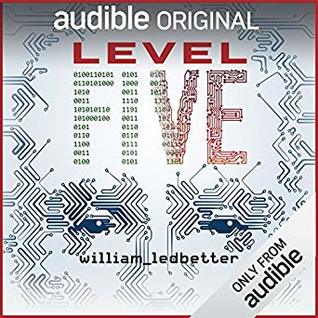
LEVEL FIVE by William Ledbetter

I met William Ledbetter at this year's WorldCon, and was intrigued by the premise of his novel LEVEL FIVE. Have a look:


In the mountains of Pakistan, a high-tech mission aimed at preventing another nuke on US soil goes off the rails - with deadly results. At a Wall Street investment firm, a computer intelligence takes the first tentative steps to free itself from its digital restraints. In a basement workshop, an engineer sees visions of a god who instructs him to defend the human race - by any means necessary.

In Level Five, the debut near-future thriller by Nebula Award winner William Ledbetter, AIs battle for dominance, and nanotechnology is on the loose. And all that stands in the way of the coming apocalypse is a starry-eyed inventor who dreams of building a revolutionary new spacecraft and an intelligence agency desk jockey faced with the impossible choice of saving her daughter - or saving the world.


According to your website bio you "spent most of you non-writing career in the aerospace and defense industry." In what ways, if any, has this informed your writing? 

A good deal of my fiction has been influenced by working in the aerospace industry. I enjoy writing space stories and since I have a solid understanding of the difficulties involved, many of my protagonists are engineers and technicians, the nuts and bolts kind of people who build and maintain these spacecraft. One of my stories, "Tethers," which is available to read for free at Baen.com is about two space hardware technicians sent to an orbital fuel depot to fix a problem, but end up stranded and fighting over the limited oxygen supply. Three of the POV characters in my novel LEVEL FIVE work with technology in either an engineering or systems design level, so I'm sure that was probably driven by my familiarity with the aerospace industry and manufacturing.

Fascinating! LEVEL FIVE is also an Audible original. How did you determine the correct pacing within this novel, and what do you hope readers will take away when they're finished?

LEVEL FIVE has multiple point of view characters, each with their own history and agenda, so the pacing was mostly driven by each of them doing things that push the plot forward. My intention was for each character to contribute to the growing tension level as I braided the four plot lines together, until the ending affected them all and was affected by them all. I primarily wanted to entertain my readers, but also to show how sometimes the smallest and most well intentioned efforts can have huge and unexpected consequences. None of my characters were perfect heroes or antagonists, they were all flawed in some way and blind to those flaws, as they all struggled to do what they thought was best for themselves, their families and humanity itself. And like much science fiction, this was kind of a stage for future technologies and how they can be used for good and evil as humanity struggles to understand their impacts.

What a great way to incorporate both internal and external conflict! How do you balance time between various projects, and how do you know when to prioritize one project over another?

 I generally have several projects going at the same time. This can be good in that I've seldom had anything resembling writer's block. If I get stuck on one project I'll just set it aside and work on one of the others. Of course it can also be bad when project deadlines are concurrent. Most of the time I can do project triage and prioritize the one with the tightest deadline or requires the most amount of work. On those occasions when I literally have to push two projects forward at the same time I will generally split them up, working on one during my regular morning writing sessions, and work on the other during evenings and weekends.

Sounds like you've been able to find a routine that works. What are some of your current projects?

I'm working on a new science fiction novel tentatively titled CHANGING HORSES, which is about the crew of a generation style colony ship that encounters a very unusual alien race. I'm also working on the opening chapters for a sequel to my novel LEVEL FIVE, but will probably not finish that one until CHANGING HORSES is complete. I also have several short stories screaming for attention, demanding to be written, so I'll have to squeeze those in somehow. I have a new short story called "What I Am" coming out in the November/December issue of Asimov's and a story called "Bridging" in the Homo Stellaris anthology coming out next year from Baen Books.


Buy: Audible

This post can also be viewed here

Tuesday, November 13, 2018

MUNMUN by Jesse Andrews

I saw Jesse Andrews on a panel at this year's Bay Area Book Festival, and he's one of the best speakers I've ever listened to. When he asked the audience who had bought a copy of his new book, MUNMUN, I held mine up proudly. Though Jesse Andrews is mostly known for YA realistic fiction like ME, EARL, AND THE DYING GIRL, MUNMUN offers a unique lens into the reality of social inequality through a fantastical premise.


In an alternate reality a lot like our world, every person’s physical size is directly proportional to their wealth. The poorest of the poor are the size of rats, and billionaires are the size of skyscrapers.

Warner and his sister Prayer are destitute—and tiny. Their size is not just demeaning, but dangerous: day and night they face mortal dangers that bigger richer people don’t ever have to think about, from being mauled by cats to their house getting stepped on. There are no cars or phones built small enough for them, or schools or hospitals, for that matter—there’s no point, when no one that little has any purchasing power, and when salaried doctors and teachers would never fit in buildings so small. Warner and Prayer know their only hope is to scale up, but how can two littlepoors survive in a world built against them?


I love your narrative voice, both in your stories, and on your website. When did you know that you'd finally found your writing voice? (Or are you still finding new ways to discover it?)

I don’t think I’ll ever feel comfortable calling a voice *my* voice. There are writers who have A Voice and then there are writers who are shapeshifting mimics who can only sound like other people and never themselves. Because they have no true selves! They’re completely contingent beings who only become people in reaction to other people or situations, and I am definitely in their category. That’s why I only write in the first person, from the perspective of characters who aren’t me and who have voices who aren’t mine.

So, that’s what I believe about myself, and yet it’s almost definitely not true, because with all three of my books so far plus a lot of the scripts that I write, the people who know me are always saying things like, “I read your book/script and it was like you were reading it in my head. I was just hearing your reedy nasal voice the entire time.” So I guess that pretty much *is* my voice.

Here’s a way better answer: I found my voice when I stopped trying to show everyone how smart I was. Before Me and Earl I wrote two novel-length manuscripts and about a dozen short stories and I was trying to smush the maximum of (what I thought of at the time as) intellect onto every single page. None of it got published. For Me and Earl I tried to just relax and let people sound like people. It went a lot better.

And it's a beautiful story as a result. Like Me and Earl, MUNMUN has an excellent premise, and it offers an interesting exploration of inequality and dreams. In what ways do you hope society can close some of these gaps? 

It’s going to be difficult for me not to be political in this answer, because the synagogue where I had my bar mitzvah was shot up by a maniac yesterday morning, and both his racist hatred and his capacity for violence were demonstrably enabled by the Republican Party. So I think we can begin by limiting that party’s power in every way possible. I think there’s at least a case to be made that the party itself should be outlawed, the way a democracy might reasonably outlaw a modern Nazi Party if one were to attempt to participate in its elections.

This is also a tough question because novelists are more at home describing and not prescribing. But one driver of inequality is people’s indifference (if not hostility) to the welfare of other people who aren’t exactly like them. So an obvious prescription is more empathy, in the form of more (and better) stories about more kinds of people. This is not a new or original point, but what I’d add is, let’s maybe tell fewer stories about Hero versus Villain, a banal and fundamentally conservative framework. If you believe some people are just evil and deserve punishment, you’re probably pretty into Fox News, or will be in ten years. If instead you believe—as anyone who actually studies this sort of thing for a living can tell you—that people’s attitudes and behavior and outlook are overwhelmingly shaped by their environments and peer groups and circumstances, and that people can change when those things change, then there’s hope. For both them and you!

But I can’t suppress my own certainty that the right wing must be put out of power as soon as possible, for as long as possible. The current presidency’s widest-reaching achievement is inarguably the sheer volume of fear it has manufactured. Monstrous, and monstrously unnecessary, fear. “I can’t just let my people get slaughtered,” said a man whose “people”—despite what his favorite websites told him—are not being slaughtered in any way, and in fact enjoy almost limitless power in this country. Then he took a (legally owned) weapon of war and massacred 11 of the gentlest and most thoughtful human beings in the world. I know because I grew up with them.

We are all definitely thinking about the community involved with the shooting in Pittsburgh, and I am so sorry for the loss of those amazing people who were so seminal in your life, and the lives of others. You are definitely right that there should be more layers of nuance in our society, and I hope that kind of change, both external, and internal, can happen soon. You also co-wrote the screenplay for the movie adaptation of ME, EARL, AND THE DYING GIRL, which won both the Grand Jury Prize and the Audience Award at the 2015 Sundance Film Festival. (I also loved your adaptation of EVERY DAY!). What do you love most about writing screenplays?

The best part by far is the collaboration. You work with artists who can do things you could never, yourself, in a million years, do. How is acting even possible? How do you just become someone else?

I also love the economy it enforces. Novels allow you to be expansive and really sit in a conversation like a nice long bath. In a script, if you can’t say it in four lines, you’re probably wasting everyone’s time. That kind of pressure makes you a much better writer. It’s also pretty stressful. So maybe I don’t love it. I’m grateful for it, let’s say that.

And obviously it’s pretty cool to get to hang out with Nick Offerman sometimes, who is about as fantastic a dude in person as you would hope. (Also a great writer! Get his books too!)

Oh, wow! I definitely will! What are some of your current projects? 

I’ve been working on the script for a movie at a major studio since January, and I’m actually not allowed to say publicly what that movie or studio is. But the studio is one of the good ones! And I think the movie will be too. Check back with me in a couple years.


Buy: BookPassage ~ Amazon.com Barnes & Noble ~  IndieBound


Buy: BookPassage ~ Amazon.com Barnes & Noble ~  IndieBound


Buy: BookPassage ~ Amazon.com Barnes & Noble ~  IndieBound

This post can also be viewed here